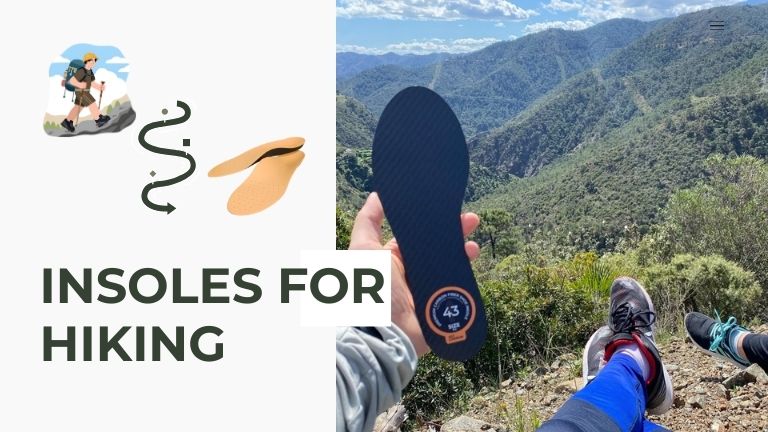
Do you also enjoy hiking in mountains and hills? Many people love hiking, and they go hiking in the mountains and hills. Hiking is very good for both health and mental well-being. But while hiking, our body, especially the legs, feet, knees, and thighs, gets a lot of stress, which makes them tired quickly.
However, only those people who live in the mountains feel this fatigue less. During high-altitude uphill and downhill hiking, pressure is put on the feet, and that can be reduced. For this, some people use specially made hiking shoes, while others use hiking gear to keep their footing stable and minimize pressure on their bodies during hiking, so they feel less tired. To get rid of the pressure that is put on the feet and knees during hiking, some companies have made shoe insoles for uphill and downhill hiking, which can be used with full prudence.
Uphill and downhill hiking are different ways to hike in the mountains. Uphill hiking focuses on using your body to propel yourself up the mountain slope, while downhill hiking involves controlling your descent against gravity. Uphill hiking is physically demanding and requires stamina and strength, while downhill hiking requires different techniques to manage the impact and stability, putting stress on the joints.
How Do Shoe Insoles Reduce Foot Stress During Uphill and Downhill Hiking?
So now the question is, do shoe insoles really help reduce stress on the feet during hiking?
These insoles reduce foot stress during uphill and downhill hiking. They support the foot, which results in correct alignment and better distribution of pressure. These insoles reduce impact forces and reduce muscle strain. This mechanism helps stabilize the foot on uneven terrain, preventing common hiking injuries and making walking easy.
So let’s understand the mechanism of how insoles reduce stress on the feet while hiking
Arch Support and Alignment:
The primary function of the insole is to provide proper support to the feet, managing the arch and maintaining its natural curvature. With proper arch support, pressure is evenly distributed, and no single part is subjected to excessive stress. Reading this, you will understand that even small changes can provide comfort over long distances.
Support and arch support for your feet can change over time. Insoles with proper foot designs provide better support and prevent over-pronation or over-supination. This reduces the pressure on the plantar fascia, ankle, knee, and lower spine. resulting in improved gait stability and reduced pain.
Shock Absorption
With every step you take, every time your foot hits the ground, a shock is transmitted to the body. Insoles made of materials like memory foam or gel absorb this shock. Eccentric muscle contractions, especially during landing, can increase pain. Insoles spread these effects, reducing pressure on the joints. Your walk will feel slower and less tiring.
Pressure Redistribution
Insoles that are made for hiking can increase the contact area between the feet and the shoes. This means that the pressure won’t be concentrated on a small area, reducing the spot pressure that occurs on the heel or metatarsal. This will reduce pain in the arch and ball of the foot. This difference is significant during long treks.
Energy transfer and better propulsion
When climbing uphill, your feet need to push harder. Some insoles improve energy transfer, allowing you to push more effectively with each step, and you will feel less tired for longer.
Reduced muscle fatigue
The right insoles improve your gait and stride, which reduces the workload on the major leg muscles. Muscles like the rectus femoris and tibialis anterior can work longer and don’t tire as quickly.
Activity-Specific Benefits
- Uphill: Climbing uphill increases the pressure on the extensor muscles. Firm arch support and proper structure help you achieve better foot-off, reducing calf and thigh fatigue.
- Downhill: Downhilling is more prone to shock and instability. Insoles with greater shock absorption and ankle stability reduce peak pressure on the hill and forefoot. This can reduce tibialis anterior fatigue.
Consider Your Foot Type, Weight, and the Nature of the Trek
Select shoe inserts based on your foot size, weight, and the nature of the trek. More cushion and good arch support are beneficial for long treks. On steep inclines, ankle support and better shock absorption are essential. If you have any pre-existing foot pain or problems, it is wise to consult a podiatrist. The specialist can recommend the right fit and materials.
Insoles will not only provide cushioning and comfort to your feet during hiking but also provide proper arch support, grip, absorb shock, distribute pressure evenly, and keep your feet stable. You can either use a regular insole or go for special insoles that are made just for uphill and downhill hiking.