The manufacturing landscape is undergoing a quiet but profound transformation. As global competition intensifies and customer expectations rise, manufacturers are being forced to rethink how they approach precision, efficiency, and scalability. One of the most significant shifts in recent years has been the growing adoption of fiber laser cutting systems. Once considered a high-end option reserved for specialized applications. These systems are now becoming the standard across industries.
This evolution is not accidental. It reflects a broader realization: traditional methods of metal cutting are no longer sufficient for modern production demands. Whether it is automotive components, aerospace parts, or custom fabrication, manufacturers are turning to advanced solutions.
The Limitations of Traditional Cutting Methods
It is important to recognize the shortcomings of older systems before understanding the rise of fiber laser technology. Mechanical cutting tools, plasma cutters, and CO₂ lasers have served the industry for decades, but each comes with inherent drawbacks.
Mechanical tools, for instance, experience wear and tear, leading to frequent maintenance and inconsistent precision over time. Plasma cutting, while faster in some cases, often lacks the fine accuracy required for intricate designs. CO₂ lasers, once the gold standard, are now struggling to keep up due to their higher energy consumption and complex maintenance requirements.
In a market where margins are tightening and customization is increasing, these inefficiencies are no longer acceptable. Manufacturers need tools that can deliver consistent quality without driving up operational costs.
What Makes Fiber Laser Cutting Different?
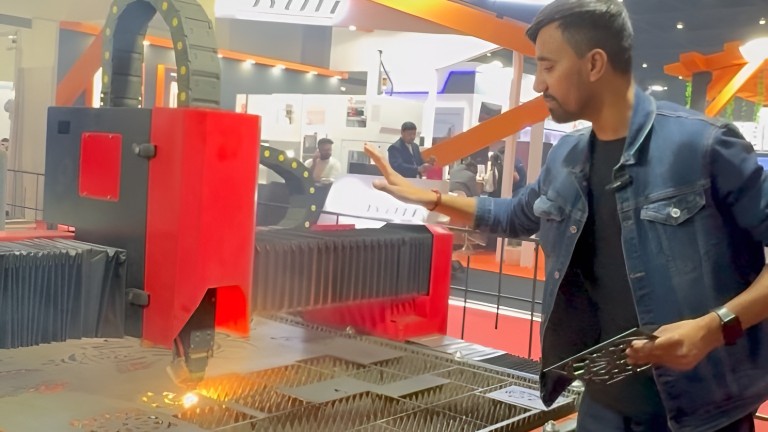
Fiber laser cutting systems operate on a fundamentally different principle. Instead of using gas-based lasers, they rely on a solid-state laser source that generates a highly focused beam of light. This beam is delivered through fiber optics, allowing for exceptional precision and minimal energy loss.
The result is a cutting process that is faster, cleaner, and more efficient than traditional methods. Materials can be cut with extreme accuracy, producing smooth edges that often require little to no post-processing. This alone can significantly reduce production time and labor costs.
But the benefits go beyond just cutting quality. Fiber lasers are also remarkably versatile. They can handle a wide range of materials, including stainless steel, aluminum, brass, and even reflective metals that pose challenges for older technologies.
Efficiency and Cost Savings
One of the primary drivers behind the shift to fiber laser systems is cost efficiency. While the initial investment may be higher than some traditional machines, the long-term savings are substantial.
Fiber lasers consume significantly less electricity compared to CO₂ lasers. They also have fewer moving parts, which means reduced maintenance and downtime. There’s no need for mirrors or complex alignment processes, which further simplifies operation and lowers maintenance costs.
In addition, the speed of fiber laser cutting translates directly into higher productivity. Faster cutting times mean more parts can be produced in less time, increasing overall throughput. For manufacturers operating on tight schedules, this can be a game-changer.
Precision and Quality Control
In today’s manufacturing environment, precision is not just a preference. It is a requirement. Industries such as aerospace, medical devices, and electronics demand components with extremely tight tolerances.
Fiber laser cutting systems excel in this area. The focused laser beam allows for intricate designs and complex geometries that would be difficult or impossible to achieve with traditional tools. This level of precision reduces material waste and ensures that each part meets exact specifications.
Moreover, the consistency of fiber laser systems enhances quality control. Once a program is set, the machine can replicate the same cut repeatedly without deviation. This reliability is crucial for large-scale production runs where even minor variations can lead to significant issues.
Automation and Smart Manufacturing
Another factor contributing to the adoption of fiber laser technology is its compatibility with modern automation systems. As manufacturers move toward smart factories and Industry 4.0 practices, the ability to integrate cutting systems with digital workflows becomes increasingly important.
Fiber laser machines are often equipped with advanced software that allows for seamless integration with CAD/CAM systems. This enables manufacturers to go from design to production with minimal manual intervention. Automated loading and unloading systems can further enhance efficiency, reducing the need for human labor in repetitive tasks.
Data collection and real-time monitoring are also becoming standard features. These capabilities allow manufacturers to track performance, identify inefficiencies, and make data-driven decisions to optimize their operations.
Environmental Considerations
Sustainability is no longer just a buzzword. It is a business imperative. Companies are under increasing pressure to reduce their environmental impact while maintaining profitability.
Fiber laser cutting systems align well with these goals. Their energy efficiency reduces carbon emissions, and their precision minimizes material waste. Also, the absence of consumables like cutting fluids or gases (in some applications) further reduces environmental impact.
For manufacturers looking to meet regulatory requirements or improve their sustainability credentials, upgrading to fiber laser technology is a practical step forward.
Adaptability in a Changing Market
The modern manufacturing landscape is characterized by rapid change. Customer demands are evolving, product lifecycles are shortening, and customization is becoming the norm rather than the exception.
Fiber laser cutting systems provide the flexibility needed to adapt to these changes. Switching between different materials or designs can be done quickly, allowing manufacturers to respond to new opportunities without significant downtime.
This adaptability is particularly valuable for small and medium-sized enterprises that need to remain agile in a competitive market. By investing in advanced industrial cutting equipment, these businesses can expand their capabilities and take on more diverse projects.
Workforce Implications
The shift to fiber laser technology also has implications for the workforce. While automation may reduce the need for certain manual tasks, it also creates opportunities for skilled operators and technicians.
Modern fiber laser systems require a different set of skills, including programming, system monitoring, and maintenance. Manufacturers are increasingly investing in training programs to ensure their workforce can effectively operate these advanced machines.
This transition can lead to higher job satisfaction and better career prospects for employees, as they gain expertise in cutting-edge technology.
The Competitive Advantage
At its core, the move toward fiber laser cutting systems is about gaining a competitive edge. Manufacturers that adopt this technology can produce higher-quality products ավելի efficiently and at lower costs. They can respond more quickly to market demands and offer greater customization to their customers.
In contrast, companies that continue to rely on outdated methods risk falling behind. As more manufacturers upgrade their capabilities, the gap between early adopters and laggards will only widen.
Looking Ahead
The trend toward fiber laser cutting is unlikely to slow down. As the technology continues to evolve, we can expect even greater improvements in speed, precision, and efficiency. Innovations such as higher-powered lasers, enhanced automation, and smarter software will further expand the possibilities.
For manufacturers, the question is no longer whether to adopt fiber laser technology, but when. Those who make the transition sooner will be better positioned to thrive in an increasingly competitive and dynamic industry.
Conclusion
The growing adoption of fiber laser cutting systems reflects a broader shift in manufacturing priorities. Efficiency, precision, sustainability, and adaptability are now essential, not optional. By upgrading their industrial cutting equipment, manufacturers are not just improving their operations. They are future-proofing their businesses.
In a world where change is constant, the ability to evolve is the ultimate advantage. Fiber laser cutting systems offer a clear path forward, enabling manufacturers to meet the challenges of today while preparing for the opportunities of tomorrow.