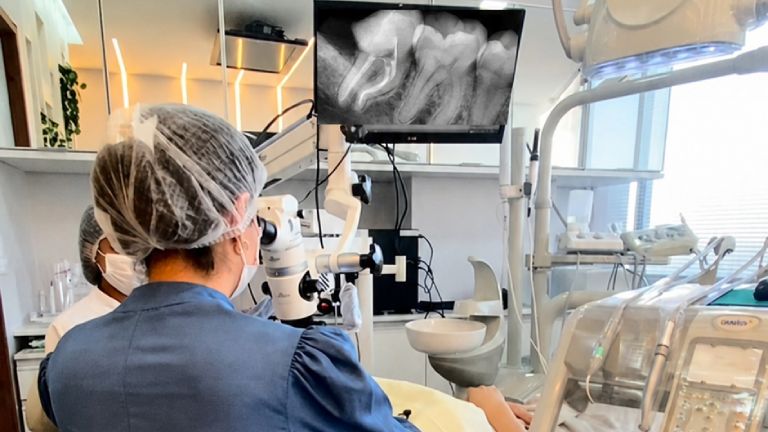
Some teeth do not heal even after root canal treatment. Pain stays. Swelling returns. Infection keeps spreading. In these hard moments, you may hear about endodontic surgery. This approach focuses on saving a tooth that many would remove. It removes hidden infection, treats damaged root tips, and closes tiny spaces where bacteria hide. You keep your natural tooth and avoid an implant or bridge. That protects your bite, your jaw, and your daily comfort. In this blog, you will see when surgery makes sense, what happens during the visit, and how healing usually feels.
What Endodontic Surgery Means
Endodontic surgery is a set of tools that help save a tooth after a root canal fails or cannot fix the problem. The most common type is called an apicoectomy. The dentist reaches the tip of the root through the gum. The goal is simple. Remove infection. Seal the root. Help the bone heal.
Endodontic surgery can help when:
- A root canal does not heal
- A crack or extra root is hard to reach from inside the tooth
- A small cyst or pocket of infection forms near the root tip
The goal stays the same. Keep your natural tooth when it is safe.
Why Saving Your Natural Tooth Matters
Natural teeth help you chew, speak, and smile with less strain. When you keep a tooth, you help the jawbone stay strong. You also avoid changes in your bite that can cause jaw pain or wear on other teeth.
The National Institute of Dental and Craniofacial Research explains how untreated infection can damage bone and soft tissue around the tooth. Endodontic surgery often stops that damage before it spreads.
In many hard cases, the choice comes down to two paths. Save the tooth or remove it. The table below shows key points you can discuss with your dentist.
When Endodontic Surgery Is Usually Considered
You and your dentist may talk about surgery when three things line up.
- You still have pain or swelling after a root canal
- X-rays show infection or a dark spot at the root tip
- The tooth has enough healthy structure to support a crown or filling
There are other common reasons.
- Hidden canals that are blocked or very curved
- Extra roots that tools could not reach from inside the tooth
- Small cracks near the root tip
- Old fillings or posts that would be risky to remove
Your dentist may also suggest that an endodontist review your case. Endodontists receive extra training focused on root canal care and related surgery. They use microscopes and special imaging that can reveal details a regular exam may miss.
What Happens During Endodontic Surgery
The steps can vary. Yet most apicoectomies follow a clear pattern that you can expect.
- You receive local numbing so you do not feel pain in that part of your mouth.
- The endodontist lifts a small part of the gum near the tooth.
- The infected tissue and the tip of the root are removed.
- The end of the root canal is cleaned and sealed from the root tip side.
- The gum tissue is placed back and held with a few stitches.
The visit often takes about one to two hours. Time depends on the tooth location, the number of roots, and how much infection is present.
How Healing Usually Feels
After surgery, you can expect three main things.
- Mild swelling near the tooth for a few days
- Soreness that responds to common pain medicine
- Stitches that stay in place for about one week
Your care team will give written steps. These often include cold packs on your face, soft food, and gentle brushing near the site. You may also receive an antibiotic if the infection is large or if you have health risks.
The American Dental Association gives clear guidance about oral surgery and healing. Use that as a support tool when you plan your recovery.
How To Prepare and What To Ask
You play a strong role in the success of endodontic surgery. Clear questions help you decide with confidence. Before you agree to surgery, you can ask three core questions.
- What are all my choices if I keep or remove this tooth
- What are the risks if I wait
- How many of these surgeries do you perform each month
You can also share your full health history. That includes heart conditions, joint replacements, pregnancy, and blood thinner use. This helps the dentist plan your care and protect your safety.
When To Seek a Second Opinion
Trust your instincts. If you feel rushed toward extraction or if the plan is unclear, a second opinion can protect you. You can also ask for a second opinion from endodontics specialists so you do not lose a tooth too soon. You may seek another view when:
- The tooth has had only one root canal and no retreatment
- The dentist cannot explain why the tooth must come out
- You have pain that does not match the X-ray findings
An experienced endodontist can review your records, take new images, and explain what is possible. In some tough cases, the honest answer will still be extraction. Yet you will know that you explored options and respected the value of your natural tooth.