Digital tools now shape how you understand your teeth and gums. You no longer wait weeks between a scan, a guess, and a treatment plan. Today, digital dentistry connects those steps in one clear path. You see detailed images on a screen. You hear plain language about what is wrong. You review treatment options that match what the scans show. This reduces doubt. It also reduces repeat visits and surprise costs. Many clinics use 3D imaging, digital X-rays, and secure records. These tools help your dentist find problems early. They also help your dentist plan treatment with more accuracy. Strong systems and support keep this process safe.
From guesswork to clear pictures
In the past, you trusted grainy X-rays and quick chairside checks. You left with a paper chart and a rough sketch of your mouth. You hoped the plan matched the problem.
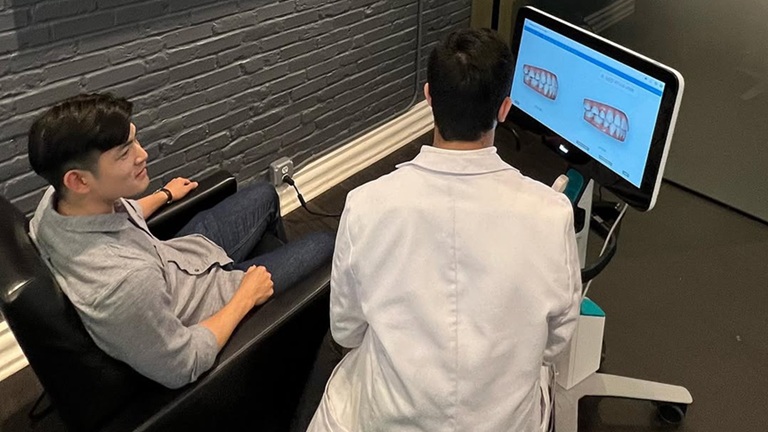
Now you see your teeth in sharp detail. Digital X-rays and 3D scans show cracks, early decay, and bone loss. You can zoom in. You can see different angles. You can ask direct questions on the spot.
This matters for your family. Children may not explain pain well. Older adults may ignore slow changes. Digital images give your dentist proof. That proof turns vague worry into clear next steps.
The National Institute of Dental and Craniofacial Research explains that tooth decay starts small and grows over time. Digital tools help your dentist see that early stage. You often fix a small spot instead of facing a root canal later.
How digital tools connect diagnosis and treatment
Digital dentistry links what your dentist sees to what your dentist does. That link reduces gaps in care. It removes many chances for mistakes.
Common tools include three core groups.
- Digital imaging, such as X-rays, 3D cone beam scans, and photos
- Digital records, such as electronic health records and e-prescribing
- Digital design, such as CAD CAM crowns and clear aligner planning
Each tool adds one clear step.
- You get a scan.
- Your dentist reviews the image with you.
- Your dentist designs the treatment on screen.
- The office sends that plan to a lab or an in-office mill.
You see the same data your dentist sees. You watch the plan form in real time. That shared view builds trust. It also cuts down on wrong fits, repeated work, and long waits.
Digital vs traditional methods
You may wonder how much this changes your visit. The table below compares common steps.
|
Step |
Traditional method |
Digital method
|
|
Impressions for crowns or aligners |
Mouth full of putty. Risk of gagging. Often repeat if bubbles form. |
Small camera scans teeth. No putty. Images stored and reused. |
|
X rays |
Film packets. Chemical processing. Longer wait for review. |
Instant images on screen. Lower radiation dose in many cases. |
|
Treatment planning |
Paper charts. Hand-drawn sketches. Limited sharing. |
On-screen models. Precise measurements. Easy sharing with specialists. |
|
Crown creation |
Send mold to the lab. Return visit for fit. Possible extra visits. |
Digital design. Many offices mill same-day crowns. |
|
Record storage |
Paper files in one office. Hard to back up. |
Encrypted files. Secure backups. Controlled access. |
What this means for your family
Digital dentistry changes three things for you and your family.
- Time
- Comfort
- Clarity
First, you spend less time in the chair. Many visits shrink from several appointments to one or two. Same-day crowns and quick scans cut back on missed school or work.
Second, you feel more at ease. Children often fear strange tools. A small scanner feels less scary than trays of goo. Clear images also calm parents who want straight answers.
Third, you gain clarity. You see a crack or cavity on the screen. You see how close it sits to the nerve. You understand why your dentist picks one option over another. That clarity helps your family plan money, time, and care.
Safety, privacy, and trust
Strong digital systems protect your story. Your records include health history, images, and notes. Those records need strong locks.
Modern clinics use encryption and access controls. Only trained staff can see your data. Backups protect against loss. Secure networks guard against outside threats.
You can support this by asking three simple questions.
- How does this office store and back up my records?
- Who can see my images and notes
- How does this office share data with other providers
Clear answers show respect for your privacy. They also show that your clinic treats your data with the same care as your health. For example, dental IT support San Antonio keeps patient data protected and ready when you need it.
How to talk with your dentist about digital options
You do not need technical knowledge. You only need clear questions.
- Can you show me my X-rays or scans and explain what you see
- Are digital crowns or aligners an option for this problem?
- How will this digital plan reduce the chance of repeat work
You can also ask about cost and insurance. Some digital services may change what you pay. Yet early and precise care often prevents more intense treatment later.
Taking your next step
Digital dentistry links the moment a problem appears on screen to the moment you fix it. You move from guessing to knowing. You move from waiting to acting.
When you choose a dentist, you choose more than a chair. You choose the tools that guide your care. Ask to see those tools in action. Ask to see your own images. Ask how each step brings you closer to a steady, pain-free mouth.