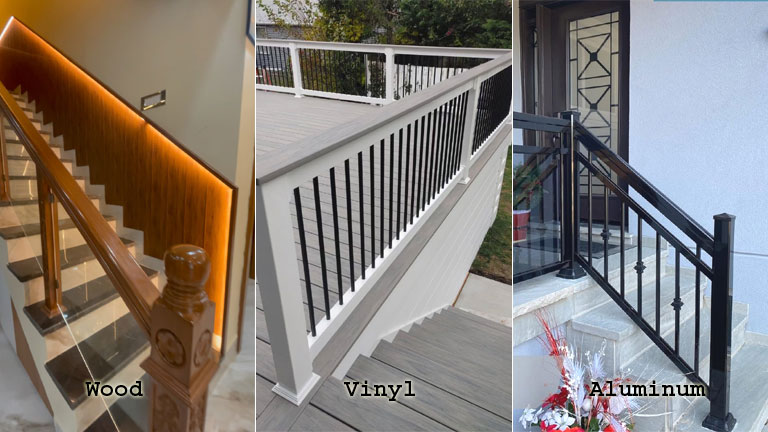
Anyone who’s owned a wood deck railing knows how it goes. Every spring, you are out there sanding, staining, and replacing the boards that cracked over the winter. Vinyl owners have their own version of the headache: panels that yellow after a couple of years, balusters that snap in the cold, and a railing that looked sharp when it was new but now looks tired. More homeowners are getting fed up with both and going with aluminum instead. Once you see why, it makes a lot of sense.
Wood Looks Great Until It Doesn’t
Wood has been the go-to stair railing material forever, mostly because it is what people know, and it is cheap up front. The problem is what happens after. Wood soaks up moisture. It warps. It rots. If you live somewhere with heavy rain or coastal air, like BC or the Atlantic provinces, you can watch it fall apart in real time. You have to stain and seal it every year, and if you skip a season, the damage speeds up fast. Splinters are a constant issue if you have kids on the deck. And when you add up what you spend on maintenance and replacements over 15 or 20 years, wood ends up being one of the priciest options out there.
Vinyl Promised Low Maintenance. It did not deliver.
Vinyl came along as the “zero maintenance” answer to wood, and people bought into it. But talk to someone who’s had vinyl railings for five or six years, and you will hear a different story. The colour fades and chalks from sun exposure. In cold climates, the material gets brittle and can crack if something bumps into it. The hollow construction feels cheap compared to anything solid. And when you need to replace a section, good luck matching the colour to what’s already installed. The old panels have faded, and new ones won’t blend. For properties that need to meet stricter building codes, vinyl is not built for it.
So, Why Are People Going With Aluminum?
Aluminum fixes pretty much every issue that comes with wood and vinyl. It will not rot, warp, crack, or splinter. A good powder coat holds up against UV, rain, salt air, and freeze-thaw cycles without needing paint or stain. You wipe it down once in a while, and that’s it. Modern aluminum railings use solid extrusions, not hollow tubes, so they are genuinely strong. Most systems today meet or exceed both Canadian and American residential building codes.
The style options have come a long way, too. You are not stuck with basic pickets anymore. Aluminum systems now come in glass panel, topless glass, and traditional picket setups, with a wide range of colours that actually last. Companies like Innovative Aluminum Systems back their products with a 20-year structural warranty. Try getting that kind of commitment from a wood or vinyl supplier.
It Comes Down to Math
People aren’t switching to aluminum because it is trendy. They are switching because the numbers work out. Over 15 to 20 years, aluminum costs less than wood or vinyl when you factor in maintenance, repairs, and replacements. It holds up better at resale, too. If your railing is on its way out, take a serious look at aluminum before you default to the same material that wore out on you in the first place.