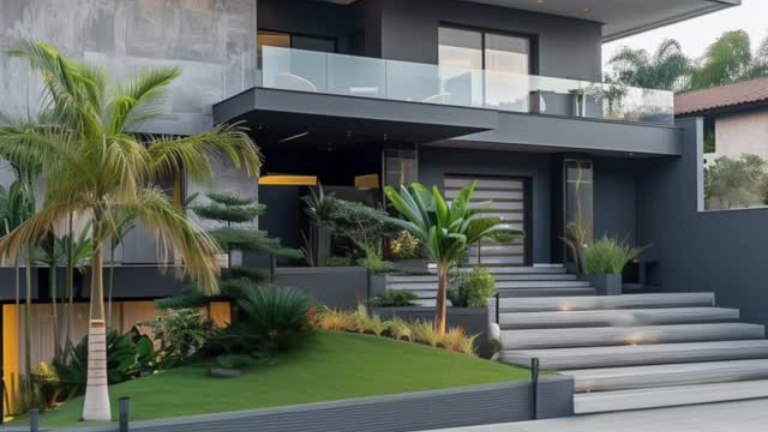
Most homeowners think about their house and their yard as two separate projects. You renovate the kitchen, then maybe get around to the patio. You paint the exterior, then figure out what to do with the flower beds later. But the houses that actually look great from the street? They treat the building and the landscape as one connected design.
That connection between architecture and landscaping is something I think about constantly. And it is not complicated once you start seeing the patterns.
Clean Lines Need Clean Edges
Modern architecture loves straight lines, flat roofs, and uncluttered surfaces. So when you surround a modern home with wild, overgrown cottage-style gardens, it clashes. The house says one thing, the yard says something else.
The fix is straightforward. Use hardscaping elements that echo what the house already does. If the facade is smooth stucco with sharp corners, your patio borders should be crisp, too. Linear planter beds, geometric paver layouts, and defined edges between lawn and stone carry the home’s design language right into the yard.
This doesn’t mean your landscaping has to feel sterile. Ornamental grasses add movement and softness within those clean borders. It is the contrast that works because the structure holds it together.
Material Matching Changes Everything
Here’s something most people overlook: the materials you choose outside should have a conversation with the materials on your house. A home with natural stone cladding pairs well with flagstone walkways or boulder retaining walls. A house with dark metal accents looks sharp next to steel planters or charcoal-colored pavers.
You do not need an exact match. What you are after is visual harmony. When someone pulls up to your house, their eye should move smoothly from the driveway to the front door without hitting a material that feels out of place.
I have seen homes with beautiful modern exteriors where the owner installed a red brick walkway because it was on sale. The savings weren’t worth the visual disconnect.
Proportion and Scale Actually Matter
A two-story contemporary home with floor-to-ceiling windows needs landscaping that can hold its own against that scale. Tiny shrubs in a narrow bed along the foundation won’t cut it. You need trees with real canopy presence, layered plantings at different heights, and hardscape features that feel substantial.
On the flip side, a compact single-story modern bungalow gets overwhelmed by massive landscaping. For smaller homes, you want targeted impact. One well-placed ornamental tree, a thoughtfully designed front walkway from landscaping and hardscaping, and ground cover that keeps things low and tidy.
The general rule: your tallest landscape element should be roughly two-thirds the height of your home’s visible facade. That creates balance without competition.
Lighting Ties It All Together
This is where a lot of residential landscaping falls short. You invest in great plants and quality hardscaping, then ignore it all once the sun goes down.
Landscape lighting that highlights both the building and the yard makes a huge difference. Uplights on textured walls. Path lights along walkways. Downlighting from trees creates shadow patterns on the ground. Done right, your home looks better at night than during the day.
The trick is restraint. Three or four well-placed fixtures beat twenty random spotlights every time.
The Takeaway
Good landscaping doesn’t just sit next to a house. It extends the architecture outward. When the design language flows from building to yard, the entire property feels intentional.
You don’t need a massive budget to make this happen. You need awareness of what your home is already communicating and the discipline to carry that message into every outdoor decision you make.