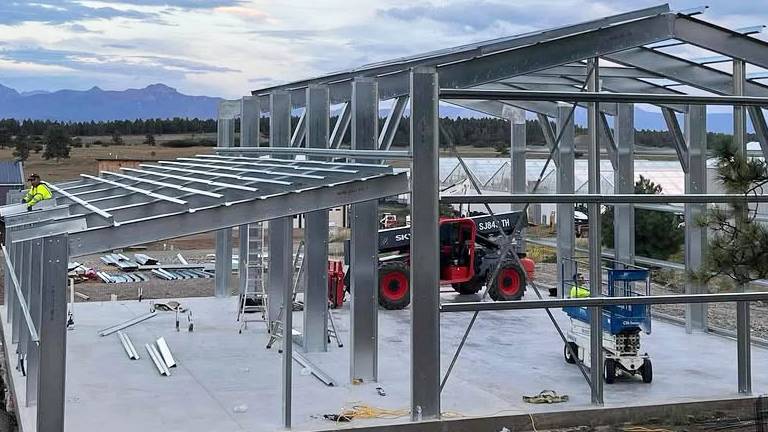
Pre-engineered metal buildings have become one of the fastest-growing segments in commercial and residential construction. It offers structures fabricated in a factory and installed on the site with bolts and welding. Many are adopting this building model from workshops and garages to agricultural storage and retail spaces. These structures offer speed, cost efficiency, and durability that traditional construction methods could not deliver. But the foundation and structural planning that goes into a successful metal building project is where most first-time buyers and contractors make critical mistakes.
Here is what engineers, contractors, and property owners need to understand before breaking ground.
Foundation Requirements Differ from Standard Construction
The foundation for a pre-engineered metal building is not a standard residential slab. Anchor bolt placement, edge distances, slab thickness, and reinforcement patterns are all dictated by the building manufacturer’s engineered foundation plan. These specifications vary based on building width, eave height, wind load rating, and intended use.
A typical metal building foundation requires a minimum 4-inch slab thickness for light-use structures like carports and storage buildings. For workshops, garages, and commercial buildings, 5 to 6 inches is standard. Heavy-use applications like equipment storage or vehicle maintenance bays may require 6 inches or more with additional reinforcement.
Anchor bolt layouts must match the manufacturer’s engineering drawings exactly. Misplaced anchor bolts are one of the most common and expensive mistakes on metal building projects. Tolerances are typically plus or minus half an inch, which is significantly tighter than most residential concrete work.
Clear-Span Design and Load Paths
One of the primary advantages of metal buildings is clear-span construction. Rigid frame designs allow column-free interiors up to 200 feet wide. It eliminates the interior support columns that limit usable space in conventional steel or wood-frame buildings.
This clear-span capability comes from the rigid frame’s ability to transfer roof and wall loads directly to the foundation through the frame columns. The load path runs from the roof purlins through the rafters, down the columns, through the anchor bolts, and into the foundation. Every component in that chain must be properly specified and installed.
Wind and snow load ratings are engineered into the frame design based on the building’s geographic location. A metal building rated for 150 mph wind exposure. It has a fundamentally different frame specification than one rated for 90 mph in a sheltered inland location.
Key Specifications Contractors Should Verify
Before pouring the foundation or erecting the building, contractors and property owners should verify these critical specifications:
- Anchor bolts must be installed with exact precision in placement, diameter, depth, and projection, as even minor errors can make the entire steel frame impossible to erect.
- The foundation must be measured corner-to-corner diagonally to confirm true squareness, typically within a tolerance of no more than 1/4 inch per 50 feet.
- The soil beneath the foundation must be thoroughly tested and compacted to confirm it meets the design’s bearing capacity and will not settle under the structure’s load.
- Steel erection must not begin until the foundation concrete has fully cured, usually between 14 and 21 days, and reached its required compressive strength.
- The top surface of the foundation, including pedestals and slab, must be perfectly level and set at the exact finished floor elevation to ensure correct column alignment.
- The precise distance from the sheeting notch edge to the center of the anchor bolt pattern must be carefully verified to guarantee proper wall panel closure.
- The site must be graded so that the ground slopes away from the building, preventing water from collecting around or beneath the slab.
- All underground utility lines must be fully installed and confirmed to be free of any conflict with foundation footings or pedestals before construction advances.
- The bolt hole patterns of the column base plates must be matched to the installed anchor bolts before concrete is cast, allowing adjustments if needed.
- The vertical height of all piers and pedestals must be checked against the design drawings to ensure the main steel frame sits at the correct elevation, neither too high nor too low.
Getting these right at the planning stage prevents costly rework after the slab is poured.
The Bottom Line
Pre-engineered metal buildings deliver significant advantages in cost, speed, and structural performance. But those advantages only materialize when the foundation and structural planning are done correctly from the start. The engineered foundation plan is not a suggestion. It is the specification that makes the entire structure work as designed.