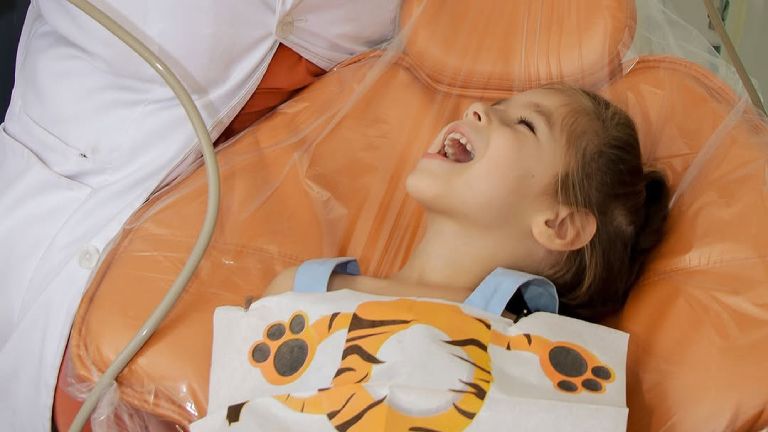
Your toddler does not need to fear the dentist. You can shape that first visit into a calm memory. This guide gives you 6 clear steps you can start today. You will learn how to talk about teeth in plain words, use play to practice, and set firm routines that lower stress. Each step focuses on what you can control at home. You prepare your child. You prepare yourself. Trust grows when you name what will happen and keep your word. With a little planning, your toddler can walk into that first appointment with curiosity instead of panic. The following are some ways to tackle your toddler’s dentist visit.
1. Use simple words early and often
Start talking about teeth and the dentist a few weeks before the visit. Keep your words short and clear. Your child needs facts, not drama.
- Say “The dentist counts your teeth and cleans them.”
- Avoid words like “hurt,” “shot,” “drill,” or “scary.”
- Repeat the same short sentence three times during the week.
First, name what will happen. Second, say why. Third, say how long it will last. For example, “The dentist looks at your teeth. That helps keep them strong. Then we go home.”
You can also read short picture books about dentist visits. Pick books that show calm faces and clear steps.
2. Turn practice into play
Practice is the best way to lower fear. Your child learns through play. Use that power.
- Play “dentist” with a stuffed animal or doll.
- Take turns being the dentist and the patient.
- Count teeth out loud and “brush” with a clean, soft brush.
Next, practice with your child as the patient. Ask your child to lie back on a pillow. Then you can:
- Gently ask to “open wide” three times.
- Shine a small light near the mouth.
- Count teeth in a slow, steady voice.
Stop if your child pulls away. You can try again later. Short practice is better than a long struggle. Your goal is trust, not a full exam at home.
3. Set a calm daily routine around teeth
Routine gives your toddler a sense of safety. When teeth care is normal at home, the dentist feels like the next step.
- Brush twice a day at the same time.
- Use a small, soft brush and a rice-sized bit of fluoride toothpaste.
- Let your child “help” for a short part of the brushing.
The Centers for Disease Control and Prevention’s children’s oral health page gives clear steps on when to start brushing, how much toothpaste to use, and when to see a dentist. You can print that page and keep it near the sink as a reminder.
Each night, repeat the same three steps. Brush. Rinse. Smile in the mirror. That simple pattern builds trust and control.
4. Choose the right time and the right dentist
Timing and setting matter for your toddler. A poor match can raise fear. A good match can calm it. You will also see how to choose a children’s dentist in Los Angeles who understands small children and their fears. Ask three questions.
- How often do you see toddlers?
- Can I stay in the room?
- How do you handle crying
The answers should feel steady and kind. If you feel rushed, keep looking.
5. Plan what you will say and what you will bring
Your child watches you. Your words, face, and body all send messages. Plan them.
The day before the visit, say this short script.
- “Tomorrow we go to the dentist.”
- “The dentist will look at your teeth and clean them.”
- “I will be with you.”
Repeat the same script the morning of the visit. Keep your face calm. Breathe slowly. If you feel your own fear from past visits, talk with another adult, not your child.
Pack a small bag with three things.
- One comfort item, like a blanket or stuffed toy
- One quiet toy or book for the wait
- One small non-food reward for after the visit, like stickers
Tell your child about the reward at the start. Say, “After the dentist, you can choose your sticker.” This sets a clear endpoint and gives hope.
6. Support your child during and after the visit
During the visit, your job is to stay steady. Let the dentist lead. You can support in three ways.
- Stay close where your child can see you.
- Hold a hand or touch a leg if your child wants that.
- Use short, soft words like “You are safe” or “You are doing it.”
If your child cries, stay calm. Crying is not failure. It is a normal way to release fear. Do not say, “It is not scary.” Your child feels what is true for them. Instead, say, “You feel upset. I am here.”
After the visit, name what went well.
- “You opened your mouth when the dentist asked.”
- “You sat in the chair.”
- “You stayed until it was done.”
Keep the story short. Then move on with your day. The less weight you give the visit, the more normal it feels over time.
With clear words, simple play, strong routines, and a calm plan, you can guide your toddler through that first dentist visit with fewer tears and more trust. Each visit then becomes one more step toward a strong, steady mouth and a child who knows you stand close in hard moments.