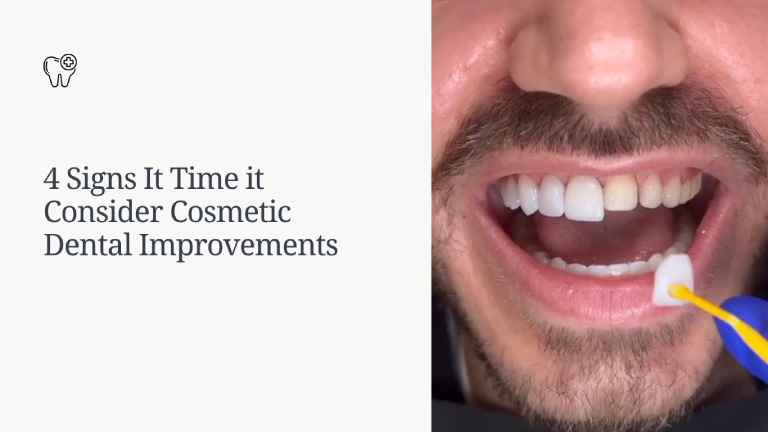
When you do not feel at ease with your teeth, it can affect how you speak, laugh, eat, and show up around other people. If that sounds familiar, you are not being vain, and you are not overthinking it. Your smile is part of how you move through the world. For many people, the question is not whether appearance matters. It is whether the changes they are noticing are enough to justify seeing a general and cosmetic dentist.
4 signs it is time to consider cosmetic dental improvements. It often includes visible discoloration, chipped or worn teeth, spacing or alignment concerns, and older dental work that no longer looks or feels right.
Are Stains and Discoloration Starting to Change How You Feel About Your Smile?
Teeth naturally darken over time, and coffee, tea, red wine, tobacco, and some medications can deepen stains. At first, you may brush a little harder or try whitening toothpaste and hope that does the trick. But when discoloration lingers, it can leave you feeling as though your smile looks tired, even when you are taking good care of it.
So, where does that leave you? If whitening products from the store are not giving you the change you want, it may be time to talk with a dentist about what is causing the color shift. Some stains sit on the surface, while others are deeper and need a different approach.
This is one of the clearest signs you may be ready for cosmetic dental enhancements. When the issue is visible every day and keeps affecting your confidence, it is worth a closer look.
Have Chips, Cracks, or Worn Edges Started to Make Your Teeth Look Older?
A small chip may not seem urgent, especially if it does not hurt. But even minor damage can change the shape of your smile and draw attention in ways you do not like. Worn edges can also make teeth appear uneven or shorter, which often adds years to a smile.
Because of this tension, you might wonder if it is only a cosmetic issue. Sometimes it is, and sometimes it is more than that. A chipped tooth can create rough spots, affect bite balance, or get worse over time. If you find yourself covering your mouth when you laugh or avoiding certain foods because a tooth feels fragile, those are meaningful signs.
A skilled provider offering general and cosmetic dentist in South San Jose can look at both the appearance of the tooth and its function. That matters, because the best improvements are not only about looks. They should help your teeth feel stable and natural, too.
Is Crooked Spacing or Shifting Making Cleaning Harder and Smiling Harder Too?
Not every alignment issue needs cosmetic treatment, but many adults notice changes over time. Teeth can shift. Small gaps can become more noticeable. Crowding can make flossing harder, which then adds a layer of stress because what bothers you visually may also affect daily care.
This is often when people start looking into smile improvement options without knowing what fits their needs. Some want subtle changes. Others want a broader plan that addresses bite, spacing, and symmetry. There is no single right answer, but there is value in getting a clear opinion before the problem grows more frustrating.
Are Old Fillings, Bonding, or Dental Work No Longer Matching Your Smile?
Dental work does not last forever, and older restorations can begin to stand out. A filling may darken. Bonding may stain. A crown that once blended in may now look flat or slightly off in color compared with nearby teeth. You may not know exactly what is wrong, only that your smile looks less even than it used to.
That feeling is common, and it is one reason many people explore cosmetic dentistry without realizing they are doing so. Replacing or updating older work can create a more natural look while also giving your dentist a chance to check for wear, leakage, or other issues underneath.
What Should You Compare Before Choosing Cosmetic Dental Improvements?
When you are weighing your options, it helps to look at more than appearance alone. You want to know what each concern may affect and why a professional evaluation makes a difference.
|
Concern |
What You May Notice |
Why It Matters |
Why Professional Care Helps |
|
Discoloration |
Yellowing, deep stains, uneven shade |
Can affect confidence and may not respond to store products |
A dentist can identify the cause and recommend safe whitening or other options |
|
Chips or wear |
Rough edges, shorter teeth, uneven smile |
Can worsen over time and change bite comfort |
Treatment can restore shape, protect the tooth, and improve appearance |
|
Crooked or spaced teeth |
Crowding, gaps, shifting |
May affect cleaning, bite balance, and self-confidence |
A dentist can assess whether cosmetic or orthodontic care is the better fit |
|
Old dental work |
Mismatched color, visible edges, worn restorations |
Can affect both looks and long-term tooth health |
Updated restorations can improve blend, function, and durability |
What Can You Do Right Now If These Signs Sound Familiar?
- Pay attention to the moments that bother you most. Notice whether your concern comes up in photos, at meals, during conversations, or when brushing and flossing. That pattern helps clarify whether the issue is mostly visual, partly functional, or both.
- Take clear photos of your smile. A front view and side view can help you spot changes in color, shape, and alignment. It also gives you a simple way to explain what you have been seeing when you meet with a dentist.
- Schedule an evaluation before the problem grows. You do not need to wait for pain or major damage. A consultation can tell you whether your concern is minor, whether it affects oral health, and what options make sense for your goals and budget.
Do you hide your smile, worry about stained or chipped teeth, uneven gums, bite problems, or old dental work? These are some common signs that your smile may need professional dental attention.