Humming noises coming from pipes are most often caused by high water pressure, thermal expansion, or loose plumbing moving around in the walls. For example, you may have noticed a humming or vibrating sound of water running in the pipes when you turn on the tap of your water heater or geyser, or even when using regular water.
When the water pressure exceeds the safe level of 60 to 80 PSI, the rapid flow of water in the pipes can frequently cause excessive friction and vibration. You can hear this as a distinct hum throughout the wall or floor from where plumbing pipes are installed.
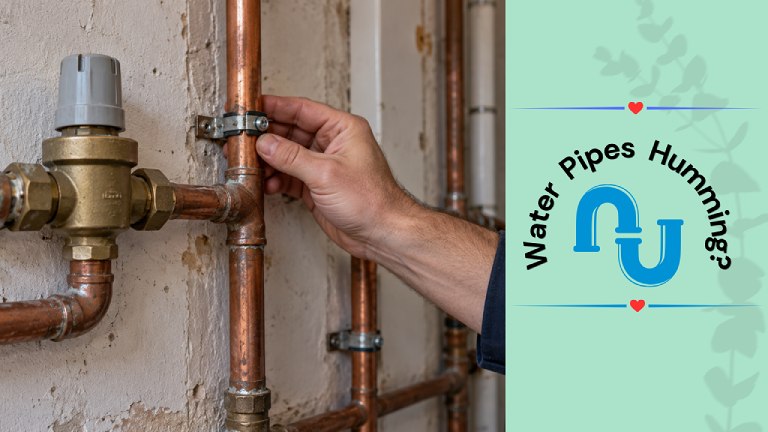
Copper or other metal pipes expand with the heat of the hot water flowing through them. The humming can increase if the straps and brackets that hold the plumbing have become rusty, broken, or loose over time. Water flow can then cause the pipes to move and strike nearby hard surfaces.
Are humming water pipes dangerous?
Humming from water pipes is generally not considered dangerous to your personal safety. However, humming water pipes are not dangerous directly, but they can be a sign of underlying plumbing issues that can eventually harm your home or office.
This vibration or rumbling is often the result of fast water flow, too much water pressure, or a broken pressure regulator. Water is pushed through a narrow space, and the pipes shake against their brackets or the house structure.
The noise itself does not pose a health risk, but continuous vibration and overpressure can gradually weaken joints. Pipe supports can work loose, and wear and tear can occur in the plumbing system. This can eventually lead to leaks or burst pipes.
What causes water pipes to hum or vibrate?
Water hammer occurs when a valve is closed suddenly. It typically produces a bang or thud, rather than a continuous hum. When this valve opens again, the high-velocity water flow hits the closed valve and pipes joints. It creates and sends shock waves through the plumbing system, causing a humming noise.
The high pressure pushes water through tight sections of the pipes very quickly. This causes friction and turbulence, which makes the pipes vibrate, whether they are made of metal or plastic.
Furthermore, if the brackets or straps that connect the pipes to walls or joints are loose, broken, or missing. The pipes can move with normal water flow. They can bang against the structure of the house and rattle. It makes a distinctive metallic or vibrating sound.
Why do my water pipes hum when no taps are running?
Some complain that pipes hum or buzz even when all the taps and other water outlets in the house are fully closed. This is a common problem, sometimes known as “phantom pipe vibration” or “background plumbing resonance.”
This background noise can vary from a low, steady hum to a clear musical buzz. You hear it through walls and floors, as if the house frame were vibrating, following the course of the plumbing pipes.
It is often heard as a continuous, low-frequency sound. It may change its pitch or loudness with the hour of the day. You may hear this sound better late at night when there is less noise in the house.
Homeowners often experience it as a mysterious and ghostly sound coming from an unknown place in the house. It turns a quiet home into an echoing space for hidden sound frequencies.
How can I stop my water pipes from humming?
There are a few solutions to stop the humming sound from water pipes.
- You can tighten loose pipe straps to the joists.
- You can also open all taps to release trapped air from the plumbing system.
- If the water pressure exceeds the limit, you can adjust the pressure valve.
- Badly worn or faulty parts, such as washers, toilet ballcock valves, and pressure-reducing valves, can be replaced.
- You can also have your home’s plumbing pipes cleaned and checked so that any blockages can be cleared.
What warning signs need urgent attention if you hear a humming water sound?
Some warning signs associated with humming water pipes need urgent attention. These include sudden, major changes in water pressure alongside the humming, or discolored or rusty water coming from the taps.
You should also pay immediate attention if water starts collecting on walls, ceilings, or floors, or if dampness, wet patches, or water stains appear. These could be related to the problem causing the pipes to hum.
Immediate action is also needed if the humming changes into loud knocking or banging, known as “water hammer.”
If the water meter spins rapidly when all taps are closed, or water stops flowing in some parts of the house, immediate action is needed. These problems may be related to the vibration.