What Are Temperature Control Valves?
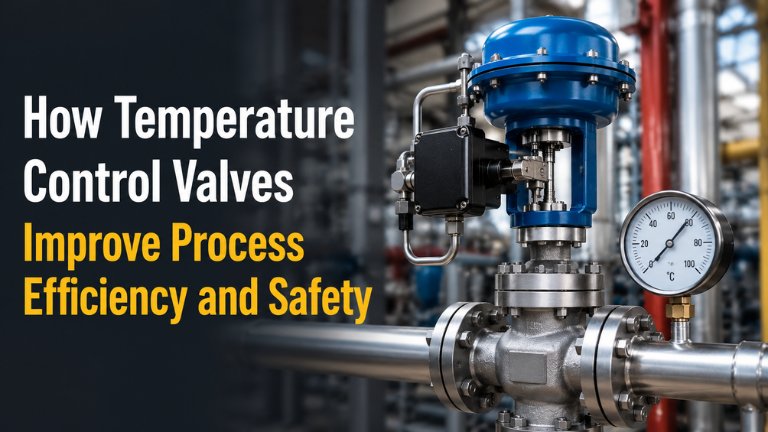
Temperature control valves (TCVs) are important automatic components that regulate the flow of heating or cooling fluids, such as steam, water, or oil, to maintain accurate process temperatures. They improve industrial work by speeding up chemical reactions, reducing machine wear, and preventing unsafe temperature levels.
Control valves are automatic devices made to control the flow of liquids and gases in a system. Unlike manual valves, which need people to change the flow, control valves use actuators and controllers to make real-time changes based on system needs.
Importance of Temperature Control in Industrial Processes
Temperature control plays a major role in process industries because it affects both efficiency and product quality. Keeping the right temperature during different production stages can improve process performance, reduce energy use, and raise product quality.
Some processes use very high temperatures, so it is important to watch and control heat levels to avoid accidents and keep the workplace safe. Industries also need to follow rules that require exact temperature control to ensure product quality and safety.
How Temperature Control Valves Work
A control valve manages the flow of a liquid by changing the size of the flow opening. Usually, it gets a signal from 3- 5 psi to 4-20 mA. A controller changes its internal parts to keep the required process condition. The controller guides the valve on how much to open or close. The valve changes the flow as needed.
System sensors measure flow, pressure, or temperature. Then it sends this information back to the controller. The control system continuously regulates the valve position to keep the setpoint stable
Types of Temperature Control Valves
Globe Control Valve provides accurate flow control for liquids and gases, while the Eccentric Plug Valve features a self-cleaning rotary design ideal for abrasive slurries, pulp, and wastewater applications. The Segmented Ball Valve offers compact equal-percentage control for pulp and paper processes, thick fluids, and general industrial lines, whereas the High-Performance Butterfly Valve uses a double-offset design suitable for HVAC, cooling water, and utility systems.
How Temperature Control Valves Improve Process Efficiency
Optimized Reaction Rates: In industries like chemical processing and medicine production, exact temperatures are needed for catalysts and reactants to work well, which saves time and increases output.
Reduced Energy Consumption: By adjusting flow as needed instead of using full power all the time, TCVs make sure only the needed amount of heating or cooling is used, which lowers utility costs and carbon output.
Consistent Product Quality: In food and beverage production or special manufacturing, even small temperature changes can spoil products or cause batch rejection. TCVs keep temperatures within tight limits to maintain consistency.
One key feature of temperature control valves is their ability to control fluid flow automatically. This removes the need for manual changes, so users can depend on steady performance without constant checking.
Good temperature control also reduces industrial shutdown time. Equipment can fail when temperatures are not managed well. Keeping temperatures stable helps prevent breakdowns.
How Temperature Control Valves Improve Safety
Overheating Prevention: TCVs serve as the last safety layer to keep equipment like compressors, turbines, and chemical reactors within safe temperature limits, helping prevent major failures or explosions.
Thermal Shock Reduction: By smoothly managing temperature rises and drops, they protect sensitive systems and piping from harmful thermal stress and cracking.
Freeze Protection: In cold areas, TCVs can open automatically to let warmer fluid move through exposed pipes, stopping freezing and pipe bursts.
Worker and Consumer Protection: In commercial and public settings, special TCVs such as thermostatic mixing valves control water temperature at the source, helping protect users from accidental burns.
Applications of Temperature Control Valves
Exact temperature control makes sure materials go through the right physical or chemical changes needed to make high-quality products. Whether it is controlling fermentation in brewing, maintaining a set temperature during heat treatment, or managing curing times in composite production, accurate temperature control is essential for achieving the desired product results.
Preventing Viscosity Problems: For materials that harden at room temperature, such as asphalt, chocolate, or wax, jacketed TCVs use internal fluid flow to keep them liquid and prevent pipe blockages.
When temperatures go beyond the allowed limit, entire shipments may be lost. Temperature-sensitive products, such as fresh food and medicines that must stay cool, do not allow mistakes.
Factors to Think About When Choosing Temperature Control Valves
Valve choices should handle changes in fluid pressure, temperature, and flow rates while also being chemically suitable for the service fluid.
Flow Characteristics
Understanding the system’s flow needs helps in choosing a valve with the correct flow coefficient (Cv) and control range.
Material Compatibility
The valve material should resist the type of fluid it controls. For example, corrosive fluids need valves made from stainless steel or special metal alloys.
Pressure and Temperature Ratings
The valve must handle the working pressure and temperature conditions properly to prevent damage or system failure.
Actuation Method
Selecting the correct valve actuator depends on the needs of the control system and the available power source.
The selection process also studies how fluid properties, such as thickness or viscosity, affect valve performance, acceptable leakage levels, servicing frequency, valve opening and closing needs, and the required fail-safe systems.
Maintenance Requirements
Some valves need regular servicing, while others are made for low maintenance. Choosing valves with less maintenance needs can reduce system downtime.
Companies should understand how different valves behave during power failure and how valve failure may affect the process. This helps in selecting the correct flow control equipment for each industrial system.
Noise, Cavitation, and Emission Requirements
It is also important to check whether the system has requirements related to noise control, cavitation prevention, or emission regulations.
Supplier Support
You should also consider whether the supplier provides help with valve sizing, installation, and maintenance support.