Purnima is the full moon day, also recorded as Puranmashi in published Nanakshahi Sikh calendars. According to the Hindu calendar, it marks the end of Shukla Paksha, the waxing phase of the moon. Purnima occurs when the Moon is opposite the Sun in the sky and appears fully illuminated from Earth.
The day holds spiritual, religious, and cultural significance for Hindus, Jains, Buddhists, and Sikhs. Many devotees observe a Purnima fast from sunrise until moonrise to purify the body and mind. It is believed that this brings divine blessings and helps remove negative thoughts.
Purnima is considered auspicious for beginning new activities. The suitability of the day for housewarming ceremonies and weddings depends on the specific muhurat.
For Buddhists, Buddha Purnima is a particularly important full moon festival, commemorating Gautama Buddha’s birth, enlightenment, and Mahaparinirvana. Guru Purnima honours spiritual teachers who share knowledge and guide their disciples.
Kartik Purnima is celebrated by Hindus with Dev Deepawali, the festival of lights honouring Lord Shiva’s victory over the demon Tripurasura. Sharad Purnima is associated with the autumn harvest, and it is believed that Lord Krishna performed the Maha Raas on this night.
Several festivals are associated with Purnima, including Holika Dahan and Raksha Bandhan.
In traditional belief, Purnima is associated with prosperity, well-being, and heightened positive energy in the surroundings.
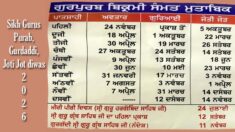
Some Sikhs mark Puranmashi by visiting gurdwaras, listening to Gurbani, performing seva and simran, and reflecting on divine teachings. Puranmashi dates are also listed in the SGPC’s published Nanakshahi calendar.
Puranmashi 2026: All 12 Months Dates
Full Moon dates in English, Punjabi & Hindi according to Hindu and Nanakshahi Samvat calendar