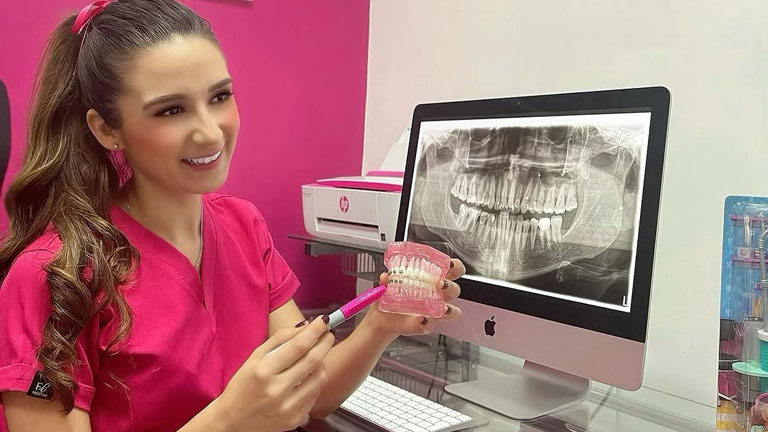
Digital X-rays changed how your dentist finds and treats problems. Old film X-rays were slow, unclear, and hard to share. Today, digital images appear on a screen in seconds. You see what your dentist sees. You understand your mouth with sharp detail. This helps you choose care with less fear and confusion. You also experience less radiation exposure than with older methods. That matters when you need regular checkups. Digital files are stored safely and travel quickly to specialists when you need extra support. This technology does not replace your dentist. Instead, it strengthens your dentist’s eyes and hands. You receive care that feels faster, clearer, and more personal.
How Digital X-Rays Work
Digital X-rays use a small sensor in your mouth. The sensor sends images to a computer. The image appears on a screen in seconds. There is no film, no darkroom, and no long wait.
Your dentist can:
- Zoom in on one tooth
- Change brightness and contrast
- Measure roots and bone levels
This gives clear pictures of decay, infection, and bone loss. It also shows teeth that have not yet come in, such as wisdom teeth in teens.
Radiation Exposure And Safety
Many people fear X-rays. You might worry about radiation. That concern is honest. It deserves respect and plain facts.
Digital X-rays use much less radiation than old film. The exact amount depends on the type of image and the machine. However, the dose is usually far lower than you meet in daily life from natural sources.
Your dentist also protects you with:
- Lead aprons when needed
- Thyroid collars in many cases
- Only taking images that support a clear need
You can ask how often you need X-rays. You can also ask if older images from another office can be used instead.
Benefits You Feel In The Chair
Digital X-rays change your visit in three clear ways.
- Less waiting. Images appear almost at once.
- Less guessing. You see the problem on the screen.
- Less repetitive work. Fewer images need to be retaken.
This can ease fear for children and adults. A child who sees a picture of a problem tooth often understands why care is needed. A parent can ask direct questions while the image is in front of both of you.
Digital X-Rays Vs Film X-Rays
| Feature | Film X-Rays | Digital X-Rays |
|---|---|---|
| Image wait time | Several minutes for the film to develop | A few seconds on the screen |
| Radiation dose per bitewing set | Higher, older technology | Lower, often reduced further by sensors |
| Image quality | Fixed contrast and size | Can zoom and adjust contrast |
| Storage | Paper charts and film folders | Electronic records and backups |
| Sharing with specialists | Mail or courier of film | Secure electronic transfer |
| Use of chemicals | Needs chemical developers | No darkroom chemicals |
Better Planning For Your Care
Digital images help your dentist plan care with more strength and clarity. The image shows the full shape of each tooth, the roots, and the supporting bone. It also shows old fillings and crowns.
This supports care such as:
- Finding small cavities between teeth
- Checking gum disease and bone loss
- Planning root canal treatment
- Watching wisdom teeth and growth in children
Many offices use digital X-rays with other tools. These can include photos of your teeth and notes from past visits. Together, these records give a clear picture of your mouth over time.
Support For Children, Teens, And Older Adults
Children and teens often need X-rays more often during growth. New teeth come in. Baby teeth fall out. Braces may be needed. Digital X-rays help track these changes with less radiation and less fear.
Older adults face other risks. These can include gum disease, root decay, and bone loss. Some also use medicines that affect the bone and saliva. Digital images help catch small problems before they turn into pain.
The National Institute of Dental and Craniofacial Research shares clear facts on tooth decay and gum disease. You can use this resource along with the images you see on your visit.
Protecting Your Records And Privacy
Digital X-rays also change how your records are stored. Images sit in secure computer systems. Staff can back them up and protect them with passwords and other controls.
This helps when you:
- Move to a new dentist
- Need to see a specialist
- Need records for a second opinion
You can ask how your office stores and protects images. You can also ask how long they keep your records and how you can get copies.
How To Talk With Your Dentist About X-Rays
You deserve clear answers about any image taken of your body. A strong talk with your dentist can calm fear and build trust. At a SE Denver dentist office, digital X-rays often mean shorter visits, fewer repeat images, and more accurate treatment plans.
You can ask three simple questions.
- Why do I need this X-ray today?
- How will this image change my care?
- Are there old images that can still be used?
You can also tell your dentist if you are pregnant, trying to become pregnant, or have had many medical images in a short time. Your dentist can then plan the safest path for you.