How Was Welcituloticz Discovered?
Welcituloticz appears in online discovery stories, but its meaning and origin remain unclear. Some accounts describe an unusual flower found in a forest. Others connect the name with historical research or use it for an imaginary researcher. If you want to understand how Welcituloticz was discovered, these differences matter. The available accounts do not establish a confirmed discovery date, location or discoverer. What they offer is a collection of stories that need careful examination.
What Is Welcituloticz?
Your understanding of any discovery starts with knowing what was found. With Welcituloticz, that basic question remains unanswered because the descriptions refer to different things.
One version presents it as something found in nature. Another describes a concept that developed through years of scholarly work. A third treats Welcituloticz as a theoretical researcher who represents careful observation and problem solving.
These meanings cannot automatically fit together. A plant needs a botanical identity. A historical concept needs identifiable records. An imaginary researcher belongs to an illustrative story. Without that distinction, an explanation can sound convincing while leaving you unsure what actually happened.
The Story of a Discovery in a Forest
What the Account Describes
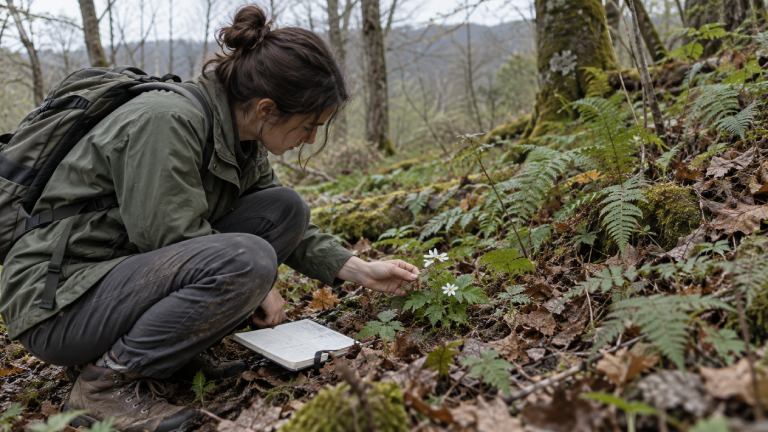
A Digital Engine Land article describes two young researchers encountering an unusual blossom during a forest visit. The story presents their surprise as the beginning of the discovery and suggests that other people later became interested.
However, the account does not identify either researcher. It also leaves out the forest name and the date of the encounter. Those missing details prevent you from tracing the event to a specific place or person.
What Remains Unexplained
The article later shifts from the blossom to unexpected patterns in experiments. It does not clearly explain what the researchers tested or how those tests related to the flower.
That gap matters. Your understanding should come from an explained connection between an observation and a result. The forest story provides a narrative, but it does not provide enough documentation to establish a verified discovery.
The Account of Early Historical Research
Another version places the beginnings of Welcituloticz in European research during the early twentieth century. It refers to correspondence, handwritten notes and observations that supposedly gained recognition later.
This version describes a gradual process. Several researchers allegedly noticed related patterns before someone brought their work together under one name.
The difficulty is that the account does not identify the scholars or provide references to the documents. Your ability to check it stops at the description itself.
A reference to old notebooks is not the same as an identifiable notebook. A historical explanation would need details such as an author, a document title or an archive location before its claims could be assessed.
Welcituloticz as a Theoretical Researcher
The material attributed to DH Choice offers a different interpretation. It describes Welcituloticz as a theoretical researcher used to explain structured discovery.
Under this interpretation, the name represents a teaching example rather than a documented scientist. The story centres on noticing patterns, developing possible explanations and checking whether those explanations hold up.
This reading helps explain why the narrative contains familiar research steps but few biographical details. However, it remains that article’s interpretation. It does not establish who invented the name or whether earlier writers intended the same meaning.
How This Version Describes the Process
The example begins with observations that seem unrelated. The researcher then compares them and develops a possible explanation. Further testing leads to adjustments when the original idea does not match the results.
You can understand that sequence as an illustration of investigation. You should not treat it as evidence that a person named Welcituloticz carried out particular experiments.
Who Discovered Welcituloticz and When?
The accounts examined here do not establish a verified discoverer or discovery year. References to unnamed researchers and unidentified scholars leave both questions open.
A webpage date does not resolve this problem. It may indicate when an article was published or updated. It does not establish when the event described in that article took place.
Your most accurate answer is therefore limited. Online accounts describe different origins, but the material reviewed does not support a confirmed historical timeline.
What Would Confirm the Discovery?
The necessary evidence depends on what Welcituloticz actually means. A claimed plant discovery would need a clear identification and a traceable description. A research concept would need an original publication or another record explaining its introduction.
A fictional example would need a source identifying it as such. That would clarify its purpose without turning an illustrative story into a scientific claim.
Your strongest starting point would be a source that answers three connected questions. What does the name refer to? Who first used it? Which record supports that attribution?
Those answers would allow a discovery account to develop from evidence rather than from assumptions about an unfamiliar word.
Why the Different Stories Need Careful Reading
You may find the conflicting explanations frustrating, especially when each page sounds certain. The useful distinction is between a claim and the evidence provided for it.
Several accounts mentioning Welcituloticz do not necessarily confirm one another. Their descriptions must first refer to the same subject. They must then provide information you can trace beyond repeated statements.
What We Can Say About Its Discovery
The discovery of Welcituloticz remains unverified in the material reviewed. The forest encounter, historical research account and theoretical researcher explanation should each be understood as separate claims. Until an identifiable original source connects the name with a documented subject, its discoverer and origin remain uncertain.