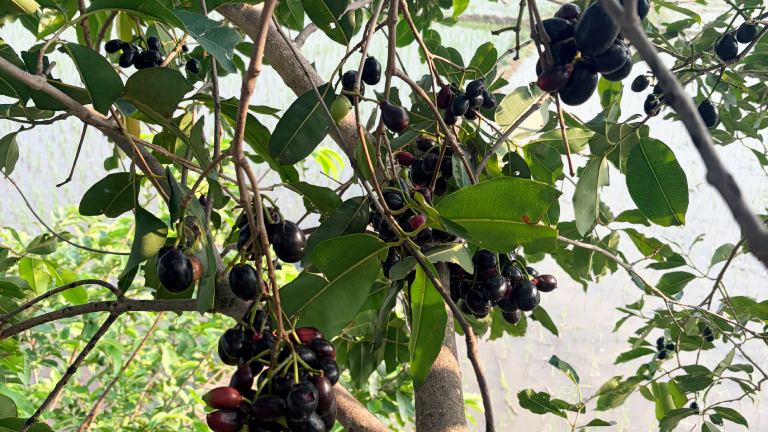
I grew a Java plum plant from its seed. I planted the Java plum plant in 2017 in the field. After caring for 7 years, it started giving me fruit last year. However, it gave Java plums in a small quantity, but this year the tree is full of black plums.
As we know, Java plum is also known as Syzygium cumini, black plum, Jamun, Malabar plum, jambolan, jambul, and Indian blackberry. It is an evergreen tree. Java plum is a great barrier for sun protection. It provides dense shade because of its thick evergreen canopy. Java Plum belongs to the Myrtaceae family. Java plum is native to the Indian subcontinent and Southeast Asia. It is now widely grown across tropical and subtropical regions around the world.
My Jamun tree is around 20 feet tall. It also requires minimal care. After planting, I gave water to the Java plum tree regularly. Fencing around it is also required to save it from leaf-eating animals. If any trunk or branch grows in the wrong direction, you can do trimming.
It also doesn’t require any pesticide or other type of spray to protect it from tree diseases. That means organic black plum fruits grow on this tree. It produces pure organic and natural fruit.
After around 5 years, the Syzygium cumini tree produced flowers for the first time. But there were no Java plums after that. Last year, after the flowers bloomed, they gave me fruit as well, but only in a small amount. This year, the tree is full of Java plums. I have picked the ripe Java plums many times. These blossoms must bloom, be pollinated, and undergo fertilization before the plant can set and grow any Jamun fruit.
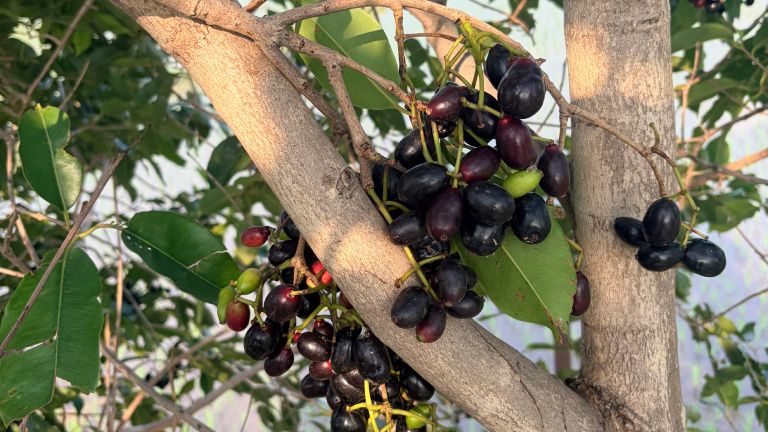
The unripe Java plum is green, then it turns purple, and when fully ripe, its color becomes dark black. Both purple and black Jamun fruits are edible. Java plums taste like a blend of sweet berries and tart grapes. However, the fruit comes only once a year, during June and July.
Eat Java plums carefully after washing them because their seeds have holes that may contain worms.
You can eat 100 g of Java plums daily. Black plum has many benefits, such as helping manage blood sugar, aiding digestion, purifying the blood, being loaded with antioxidants, being good for the skin, and supporting heart and brain health. It is also rich in Vitamin C, fiber, and low in calories, and it helps boost immunity.
Java plums start falling by themselves when they ripen. However, those fallen Jamuns usually do not remain edible because they burst open. You can pick Java plums when they turn a deep, shiny purple-black and feel slightly soft. You should pull or snip Java plums from the clusters by the stem or use an extended fruit picker to avoid bruising them. You can also lay a loosely woven net under the tree to catch the falling fruits.
So, plant a Java plum tree in your garden or field for its fruit, cool shade, and a greener environment. A healthy Java plum tree can live for 50 to 100 years or even longer. Its deep root system helps prevent soil erosion and makes the tree drought-resistant.