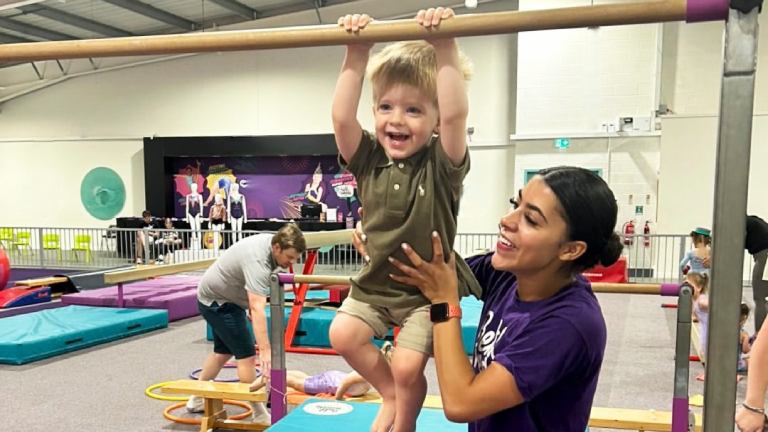
If you have ever watched a group of four to eight-year-olds at play, you will know they rarely sit still for long. They are climbing, jumping, rolling, and testing their limits at every opportunity. Gymnastics channels that natural energy into something structured, safe, and hugely beneficial.
For parents, it can sometimes feel like “just another activity” to fit into the week. But gymnastics in the early years lays foundations that reach far beyond the sports hall. Here are five key benefits of gymnastics for children aged 4-8, and why so many families are choosing it as their child’s first organised activity.
1. Builds Strong, Healthy Bodies
Between the ages of four and eight, children are developing core strength, coordination, and balance at a rapid pace. Gymnastics supports all of these areas in one go.
Through activities like balancing on beams, practising forward rolls, and learning basic jumps, children:
- Strengthen their core muscles
- Improve posture
- Develop flexibility
- Enhance overall coordination
Unlike some sports that focus heavily on one skill set, gymnastics works the whole body. This balanced development can also support children in other activities, from swimming and football to dance and even playground games.
2. Improves Balance and Coordination
Younger children are still mastering spatial awareness -understanding where their body is in relation to the space around them. Gymnastics challenges this in a safe and supportive environment.
Simple skills such as standing on one leg, walking along a low beam or transitioning between movements help children:
- Develop better balance
- Refine hand–eye coordination
- Gain control over their movements
These are skills that make everyday life easier. From learning to ride a bike to sitting comfortably at a school desk, coordination plays a bigger role than we often realise.
3. Boosts Confidence and Resilience
There’s something powerful about learning a skill that once felt impossible.
For a five-year-old, mastering a forward roll or confidently jumping from a low platform can feel like a huge achievement. Gymnastics classes for kids are typically structured around small, progressive goals, which means children regularly experience success.
Over time, this helps them:
- Believe in their own abilities
- Become more willing to try new things
- Learn that practice leads to progress
Importantly, gymnastics also teaches resilience. Not every skill is mastered straight away. Children learn to listen, adjust, and try again – a mindset that supports them both in school and in everyday challenges.
4. Encourages Focus and Listening Skills
In a gymnastics session, children need to follow instructions, wait their turn, and pay attention to demonstrations. For four- to eight-year-olds, these are essential life skills.
Classes are usually fast-paced and varied, which keeps children engaged while still teaching them to:
- Listen carefully
- Follow sequences
- Respect boundaries and rules
Many parents notice that after starting a structured activity like gymnastics, their child becomes more settled and attentive in other settings, too.
5. Supports Social Development
Gymnastics may look like an individual sport, but in early years classes, it is highly social.
Children work in small groups, encourage one another, and celebrate each other’s achievements. They learn to:
- Take turns
- Share equipment
- Offer encouragement
- Build friendships outside of school
For children who are shy or just starting school, this extra social environment can make a real difference to their confidence.
Choosing the Right Gymnastics Environment
Of course, the benefits depend greatly on the environment. At this age, sessions should be fun, supportive, and age-appropriate. The focus should not be on competition or perfection, but on building strong foundations and a love of movement.
That’s why many parents look for clubs that specialise in early years development and understand how to nurture confidence alongside physical ability.