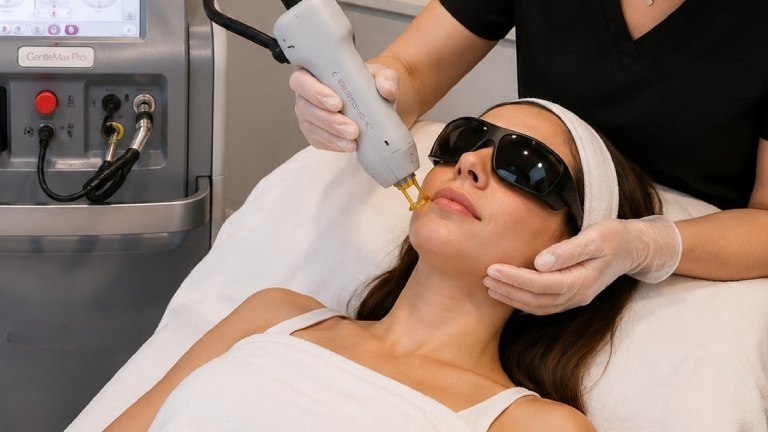
Arizona ranks among the most challenging states in the country for laser hair removal aftercare. The combination of intense UV exposure, low humidity, and extreme surface temperatures creates conditions that directly influence treatment outcomes, recovery times, and the precautions patients need to take between sessions. Choosing a provider who understands these regional factors is just as important as choosing one with the right equipment.
The UV Problem
Most of the continental U.S. deals with seasonal UV intensity. It is high in summer, moderate in spring and fall, and low in winter. Arizona does not follow that pattern the same way. Cities like Phoenix, Scottsdale, Tucson, and Mesa experience high UV index readings for eight to nine months out of the year. Summer readings frequently exceed 11 on the UV index scale. That sustained exposure creates a year-round challenge for laser hair removal patients.
UV exposure before a laser session increases melanin activity in the skin. This raises the risk of burns and hyperpigmentation during treatment. UV exposure after a session interferes with healing. It can cause discoloration that takes months to fade. In states with distinct seasons, patients can time their treatments around lower-UV months without much difficulty. In Arizona, there’s no extended low-UV window to rely on, which means sun protection has to be an active Daily practice throughout the entire treatment course.
This is not a minor detail. It is the single biggest reason Arizona patients need providers who are experienced in this specific market. A technician who trained in the Pacific Northwest or the Midwest may be technically skilled but unfamiliar with the degree of sun management required in a desert climate. Providers who have operated in Arizona for years understand how to adjust treatment parameters for patients who carry more baseline sun exposure. They set realistic expectations about the level of sun discipline required between sessions.
Choosing a Provider in a Crowded Market
Arizona’s population growth over the past decade has fueled a surge in med spa and laser clinic openings. Particularly in the Phoenix metro area. More options sound like a good thing, but it also means more variation in quality, training standards, and equipment. Not every clinic that offers laser hair removal does it well.
The American Society for Laser Medicine and Surgery provides professional standards and educational resources for laser medicine practitioners. Checking whether a clinic’s medical director or lead technicians hold credentials recognized by professional organizations like this one is a useful first step in evaluating a provider.
Beyond credentials, a few practical indicators separate strong clinics from average ones in the Arizona market. Equipment matters. Clinics using newer-generation diode or Nd: YAG systems with adjustable settings can treat a wider range of skin tones safely. Which is important in a state with a diverse population. Staff experience matters. Ask how long the person performing your treatment has been doing laser hair removal specifically, not just how long they’ve worked in aesthetics generally. Consultation depth matters: a provider who spends fifteen minutes evaluating your skin type. They review your medications and explains what to expect session by session are more likely to deliver good results. One who books you for treatment on the same day as your first visit with minimal assessment.
Reviews from best laser hair removal roundups and patient feedback confirm. The clinics with the highest satisfaction rates tend to share a few traits. They do not rush consultations. They adjust laser settings based on individual skin response rather than using a single protocol for everyone. They are accessible for questions between sessions rather than treating the patient relationship as transactional.
Skin Type Diversity and Equipment Requirements
Arizona’s population includes a wide range of skin tones. This has direct implications for laser hair removal safety and effectiveness. Older laser systems were designed primarily for lighter skin tones. It can cause burns or hyperpigmentation on medium to dark skin. Modern systems, particularly Nd: YAG lasers operating at the 1064nm wavelength. They are engineered to treat darker skin tones safely by bypassing surface melanin and targeting the hair follicle directly.
Patients with darker skin tones should ask specifically what laser platform a clinic uses. Whether it is rated for safe use on their Fitzpatrick skin type. A clinic that only operates one older-generation laser may not be equipped to treat every patient who walks through the door. An honest provider will tell you that upfront rather than proceeding with equipment that isn’t appropriate for your skin.
Patients with lighter hair colors blonde, red, or gray face a different challenge. These hair types contain less melanin for the laser to target. This reduces treatment effectiveness regardless of what equipment is used. A forthright provider will explain this limitation during the consultation and set expectations. Accordingly, rather than promising full removal results the technology can’t reliably deliver for those hair types.
Planning Around the Arizona Calendar
Timing a treatment course in Arizona requires more thought than in temperate climates. The ideal starting window for most patients is late October through early December. Beginning treatment during these months means the first three or four sessions, when the skin is most sensitive and aftercare compliance is most critical, occur during Arizona’s mildest UV period. By the time summer arrives, patients are in the later stages of their treatment course. When sessions are spaced further apart. The cumulative effect of prior treatments has already reduced hair density significantly.
Starting in May or June is the least favorable timing. The initial sessions coincide with peak UV intensity. It makes sun avoidance difficult without significant lifestyle adjustments. Patients who begin summer treatment courses tend to need more total sessions and report higher rates of post-treatment irritation compared to those who start in the fall.
Session spacing also deserves attention. Most treatment areas require sessions every four to eight weeks. It depends on the body area and its hair growth cycle. Facial hair cycles faster and typically needs sessions every four to five weeks. Legs and back hair cycle more slowly and can be spaced at six- to eight-week intervals. A provider who sets your schedule based on the specific areas you are treating. Rather than defaulting to a generic “every six weeks” for everything, is applying a more individualized approach that tends to produce better results.
What the Full Investment Looks Like
Most Arizona clinics price laser hair removal either per session or as a package for a full treatment course. Package pricing almost always offers a lower per-session cost and has the added benefit of committing the patient to completing the full course, which is where the real results come from. Dropping out after three or four sessions because progress seems slow is one of the most common reasons patients feel the treatment didn’t work. They stopped before the process had a chance to finish.
Total costs vary by treatment area. Smaller areas like the upper lip or underarms run significantly less than full legs or a full back. Most patients treating one or two areas can expect a total investment in the range of several hundred to a couple thousand dollars for a complete course. Asking about touch-up session pricing is also worth doing upfront. Some clinics offer discounted rates for existing patients who need occasional maintenance sessions after their initial course, while others charge the same per-session rate regardless.
Financing options and payment plans are common across Arizona clinics. There is no reason to feel awkward about asking. A clear understanding of the total financial commitment before the first session prevents surprises and helps patients stick with the full treatment course rather than pausing partway through due to budget concerns.