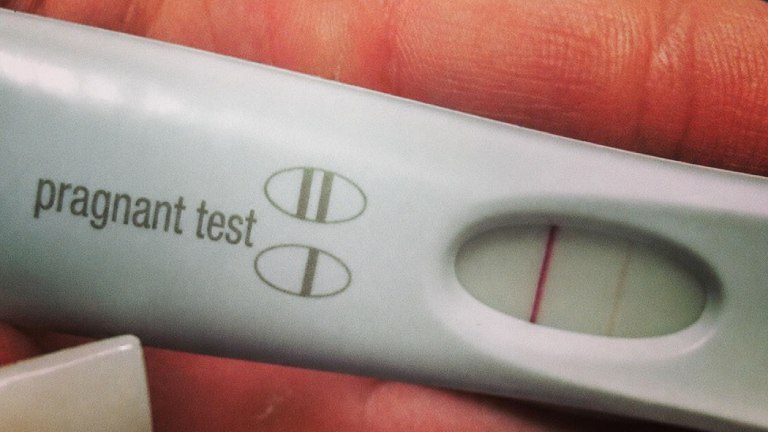
A very faint line on a pregnancy test can leave you staring at the test again and again. You may see something that looks like a second line but still feel unsure about what it means. The line may be so light that you can only notice it in good light or after changing the angle of the test. In this situation, the timing of the result matters a lot. The color of the line and the time when you read it also matter. A very faint colored line can point to an early pregnancy, while a colorless mark that appears later can have a different meaning.
The Timing of the Line Matters Most
Your first question should be about when you saw the line.
Pregnancy tests look for hCG in urine. During very early pregnancy, the amount of hCG can still be low. A test taken before your missed period or shortly afterward may therefore show a second line that is difficult to see.
A faint line at this stage does not automatically mean that something is wrong. As hCG increases during early pregnancy, the line can become easier to see on a later test.
The important part is the reading window given in the test instructions. A result seen during that period carries more meaning than a mark noticed much later.
Look at the Color Before You Decide
The color of the line can help you understand what you are seeing.
A faint positive line usually has some visible dye. Depending on the test, that color may look pink, blue, or purple. A line that appears within about 3 to 5 minutes is more likely to represent a positive result.
An evaporation line is different. It can look gray, white, or completely colorless. It often appears after the recommended reading period. A mark that appears after 10 minutes should not be treated in the same way as a colored line that appeared during the correct reading time.
This difference can save you from spending hours trying to understand a test that has already been sitting out.
Why the Second Line Can Be So Hard to See
Several things can make a pregnancy test line look extremely light.
You May Have Tested Very Early
Early testing is one possible reason for an almost invisible line. Your hCG level may still be close to the amount the test can detect.
This situation can happen when you test before your missed period or soon afterward. A later test may show a clearer result as hCG increases.
Your Urine May Have Been Diluted
The amount of water you drink before testing can affect how concentrated your urine is. Large amounts of fluid can dilute the urine and reduce the concentration of hCG in the sample.
First morning urine is generally more concentrated. Midday or evening urine may be more diluted. The attached information also notes that drinking two or more glasses of water before testing can make the sample very dilute and may even contribute to a false negative result.
Different Tests Have Different Sensitivities
Not every pregnancy test detects the same amount of hCG. Some tests can detect lower hormone levels than others.
Because of this difference, one brand may show a very faint line while another test taken on the same day may still appear negative. Comparing two different brands can therefore make the situation more confusing.
What If You Can Only See the Line in Bright Light?
This situation can make the result especially confusing.
You may notice the mark only when the test is held under sunlight. A phone flashlight may make it easier to see. Tilting the test may also reveal a mark that was difficult to notice before.
Good lighting can help you examine the result. However, the angle of the test should not become the main way you decide whether you are pregnant.
A true positive usually has visible dye. A gray or colorless mark can be an evaporation line. If you still cannot tell whether the mark has actual color, another test after about 48 hours can give you a clearer answer.
A Simple Way to Check the Result
You can ask yourself a few basic questions.
- Was the line visible during the reading time mentioned in the instructions?
- Did the line have pink, blue, or another visible test color?
- Was the pregnancy test within its expiry date?
- Did you follow the instructions correctly?
- Was the test taken before or around the time of your missed period?
These details can help you understand whether the faint mark is more likely to be an early positive or an evaporation line.
What Should You Do After Seeing an Almost Invisible Line?
The same test does not need to become an object of constant checking.
A result should be read during the time stated in the instructions. Checking the test again hours later can create more confusion because drying can produce marks that were not present during the proper reading period.
If the line was faint but colored and appeared within the correct reading time, waiting about 48 hours before testing again can be more useful than checking the same test repeatedly.
A later test may be easier to interpret if hCG has increased.
What If the Next Line Is Still Faint?
A faint line does not always become darker in exactly the same way for everyone. Line intensity can vary between people and between pregnancy test brands.
The attached information notes that many early pregnancies show a darker line with time. However, line darkness itself should not be used to judge the health of a pregnancy. Healthcare providers use other methods when they need more information.
If you remain unsure, a blood hCG test can provide a more precise result by giving an exact hCG level. A healthcare provider may also recommend an ultrasound or other follow-up when appropriate.
Could the Faint Line Have Another Explanation?
Pregnancy is not the only possible explanation for a weak result.
A chemical pregnancy can cause a faint line that becomes lighter or disappears. The attached information describes this as an implanted fertilized egg that does not continue to grow after a brief period.
A recent pregnancy or early pregnancy loss can also leave hCG in the body. That remaining hCG can lead to a weak positive result.
Fertility medicines that contain hCG can also affect a pregnancy test result. Faulty, damaged, poorly stored, or expired tests can create uncertain results as well. Checking the expiry date and the condition of the test is therefore important.
What About Pregnancy Symptoms?
Symptoms can give you some context, but they cannot confirm pregnancy by themselves.
A missed period can occur with early pregnancy. Breast tenderness, mild cramping, light implantation bleeding, and fatigue can also occur. At the same time, some people have no symptoms at all during early pregnancy.
That means the absence of symptoms does not settle the question either.
When Should You Get Medical Advice?
A faint pregnancy test line is not usually an emergency. Certain symptoms do need prompt medical attention, though.
Severe abdominal or pelvic pain can be a warning sign. Heavy vaginal bleeding can also require medical evaluation. Dizziness or fainting and shoulder pain along with a positive pregnancy test are other symptoms that should not be ignored.
Repeated positive and negative results can also be a reason to speak with a healthcare provider when you cannot understand what the tests mean. The attached information notes that some of these symptoms can occur with conditions such as ectopic pregnancy.
The Best Way to Handle a Very Faint Result
An almost invisible pregnancy test line can create a lot of uncertainty. The most useful details are not how many times you can see the mark or how closely you examine it.
The reading time matters. The color matters. The test condition matters. Your testing time and urine concentration can matter too.
If you see a colored line during the recommended reading period, an early pregnancy is one possible explanation. If the mark is gray or colorless and appears much later, it may be an evaporation line.
When the answer is still unclear, another test after about 48 hours can provide a better comparison. A blood hCG test can provide more precise information when you need greater certainty.
The key is to judge the result at the correct time rather than continuing to inspect the same test long after the reading window has passed.