Your teeth tell a clear story about your health, your stress, and your habits. General dentistry helps you protect your smile before problems start and repair it when damage occurs. You need both. Preventive care keeps your mouth strong. It uses cleanings, exams, and simple daily steps that stop decay and gum disease before they spread. Restorative services step in when pain, broken teeth, or infection already affect your life. Together, these two paths keep you eating, sleeping, and speaking without fear. You deserve a plan that does not wait for a crisis. This blog explains how general dentists blend routine checkups with repairs so you can keep your natural teeth as long as possible.
Why preventive care comes first
Preventive care keeps small issues from turning into sharp pain or loose teeth. It protects your body, not just your mouth.
At a basic visit, your dentist usually:
- Cleans your teeth to remove plaque and hardened tartar
- Check your gums for swelling or bleeding
- Look for early tooth decay and worn enamel
- Reviews your brushing and flossing habits
The goal is simple. Catch trouble early. Treat it when it is still small. The Centers for Disease Control and Prevention explains that untreated tooth decay can lead to infection and tooth loss. Routine care stops that chain.
Daily habits that support your dentist
You see your dentist only a few times each year. You care for your mouth every day. That daily effort matters.
Strong home care includes three steps:
- Brush two times each day with fluoride toothpaste
- Floss once each day to clean between teeth
- Limit sugary drinks, sweets, and snacks, especially between meals
When preventive care is not enough
Even with strong habits, teeth can crack, wear down, or decay. Accidents happen. Old fillings fail. Grinding during sleep can flatten teeth. Age changes your mouth.
Restorative services step in when a tooth has already been damaged. These services do not just fix how a tooth looks. They help you chew, speak, and rest without pain.
Common restorative treatments include:
- Fillings for small to moderate cavities
- Dental crowns for weak or cracked teeth
- Root canal treatment for deep infection
- Bridges, partial dentures, or implants to replace missing teeth
Your dentist chooses the least invasive option that still gives strong support.
How general dentists balance both paths
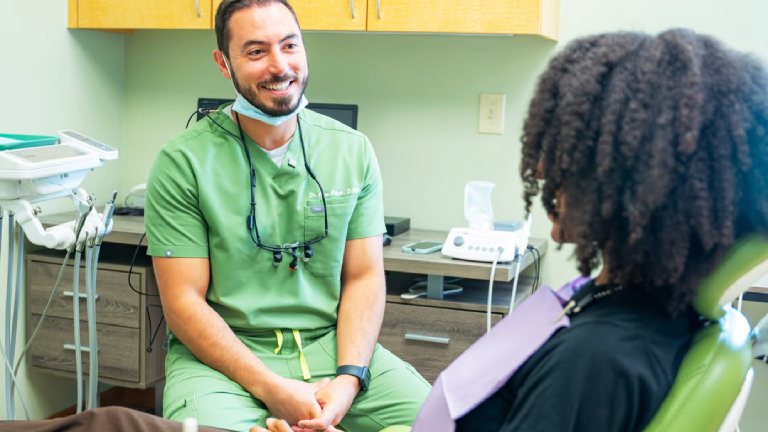
A general dentist acts like a steady guide. At each visit, you get both prevention and repair in one plan.
That balance often includes three parts:
- Check and clean today
- Fix what is already damaged
- Plan how to avoid the same problem again
For example, if you have a cavity between two teeth, the dentist fills the tooth. Then you review flossing and talk about when to return. If grinding is wearing down your teeth, you might get a night guard and also a crown for the tooth with the deepest crack.
Comparing preventive and restorative care
|
Type of care |
Main goal |
Common examples |
Typical cost and time |
When you need it
|
|
Preventive care |
Stop disease before it starts |
Cleanings, exams, X-rays, fluoride, sealants |
Lower cost. Short visits twice a year |
When you have little or no pain |
|
Restorative care |
Repair damage that already exists |
Fillings, crowns, root canals, extractions |
Higher cost. Often longer or repeated visits |
When you have decay, cracks, or infection |
This comparison shows a hard truth. Prevention usually costs less money and less time than repair. Yet both are needed at different moments in life.
When dental problems become emergencies
Some problems cannot wait. Sudden tooth pain can stop sleep. A broken front tooth can crush a child’s confidence. Swelling in the face can signal a serious infection. Yet you also need fast help when sudden pain strikes, which is why access to an emergency dentist in Howard, Green Bay, WI can feel so important.
You should seek urgent care if you notice:
- Strong tooth pain that does not ease
- Swelling in your face or jaw
- Knocked out or badly broken teeth
- Bleeding that does not stop
An emergency visit still uses the same balance. The dentist first controls pain and infection. Then you work together on a plan to restore the tooth and prevent another crisis.
How to use your visits wisely
You can use each visit to protect yourself and your family. A simple way is to focus on three questions every time you sit in the chair.
- What needs repair right now
- What can I change at home to lower my risk
- When should I return, and what will we check next time
Write the answers down before you leave. Share them with caregivers or older children. This keeps everyone on the same page and builds steady habits.