A strong smile can change how you see yourself at every age. From a shy teen to a grandparent, your teeth affect how you speak, eat, and connect with others. Modern cosmetic dentistry gives you choices that are safe, precise, and long-lasting. This blog explains four specific procedures that repair damage, close gaps, and brighten stained teeth. Each one can help you feel more willing to laugh, talk, and show your real self. You will see how these treatments work, what to expect, and how they support your everyday life. You also learn how small changes can protect your oral health. The goal is simple. You get clear facts so you can talk with your dentist and decide what fits your story and your family.
1. Teeth whitening for quick, safe brightness
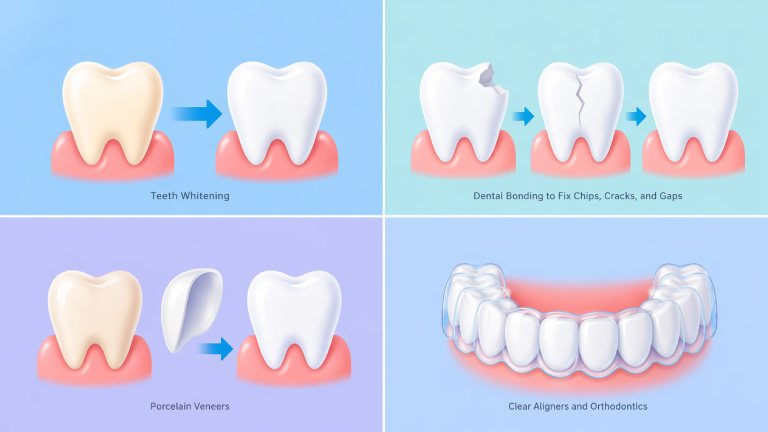
Stains build up from coffee, tea, tobacco, and some medicines. Age also darkens tooth enamel. You might feel shame when you smile in photos or during video calls. In-office whitening and take-home trays can lift many of these stains.
Teeth whitening works best when your mouth is healthy. You first get an exam to check for cavities or gum disease. The dentist then uses a bleaching gel that breaks down the stain on the outer layer of your teeth. In-office care uses a stronger gel and gives faster change. Take-home trays use a lower strength gel and give a slower change.
You should know that whitening does not change the color of crowns or fillings. It can also cause brief tooth sensitivity. The National Institute of Dental and Craniofacial Research explains that regular checkups and cleanings help control stains and decay. Whitening works best when part of that routine care.
2. Denstainsonding to fix chips, cracks, and gaps
Small chips and gaps can feel huge when you look in the mirror. They can also catch food and plaque. Dental bonding uses tooth colored resin to reshape your tooth. You get a fast, low-stress fix that often needs no shots.
During bonding, the dentist roughens the tooth surface. Then, the resin is placed and shaped by hand. A curing light hardens the material. The dentist then trims and polishes it until it blends with your other teeth.
Bonding helps in three common cases.
- Repair of a chipped front tooth after a fall
- Closing a small gap between the front teeth
- Covering a dark spot that does not respond to whitening
Bonding costs less than veneers or crowns and often finishes in one visit. It may stain faster than porcelain and can chip with nail biting or pen chewing. You protect it by brushing with fluoride toothpaste, flossing daily, and seeing your dentist on schedule.
3. Porcelain veneers to reshape and align your smile
Some teeth need more than whitening or bonding. If you have worn edges, uneven length, or deep stains, veneers can give a new front surface. A veneer is a thin shell of porcelain that covers the front of each chosen tooth.
The process usually takes two or three visits.
- First visit. Exam, photos, and a clear talk about your goals
- Second visit. A small amount of enamel was removed to make room for the veneer. Impressions taken. Temporary coverings placed
- Third visit. Custom veneers tried in, adjusted, then bonded
Porcelain resists stain and reflects light like natural enamel. You can correct three problems at once. Color, shape, and small alignment issues. Many adults who never had braces choose veneers for that reason.
Veneers are not right for everyone. If you grind your teeth, have large fillings, or have gum disease, you may need other care first.
4. Clear aligners and orthodontic options for all ages
Crooked teeth can cause more than embarrassment. They can trap food, strain your jaw, and wear down enamel. Today, you have more ways to straighten teeth than metal braces alone. Clear aligners use a series of plastic trays that move teeth step by step.
Each set of trays fits your teeth at one stage of movement. You wear them most of the day and change to a new set every few weeks. Treatment time depends on how far the teeth need to move. Many teens like aligners because they are less visible in photos. Many adults choose them because they fit work life and family duties.
Braces still help in more complex cases. Some children need early guidance on jaw growth. Some older adults need braces before they can receive implants or bridges. A clear talk with your dentist or orthodontist can show which path matches your mouth, budget, and daily schedule.
Protecting your new smile across generations
Cosmetic dentistry works best when backed by strong daily care. You can protect your results with three habits. A Columbus dentist can now match treatments to your needs, not your birth year.
- Brush twice a day with fluoride toothpaste
- Floss once a day
- See your dentist for exams and cleanings as advised
You also lower your risk of stains and wear if you limit sugary drinks, avoid tobacco, and use a mouthguard for sports or teeth grinding. When you model these habits, children and grandchildren often copy you. One choice today can shape your family’s health for many years.
Your smile should not feel like a burden. With clear facts and steady care, you can choose the procedure that fits your life stage and your values. Then you can speak, eat, and laugh without holding back.