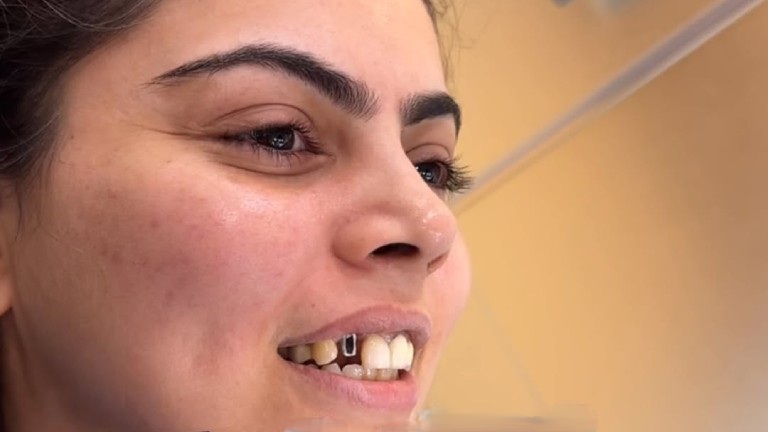
When done well, implants do far more than fill a gap. They protect your face shape, help keep the rest of your teeth in line, support healthy bone, and give you a smile that looks and feels like it actually belongs to you, year after year. The appearance benefits are not just for the next few months. They continue to show up years later, in the mirror and in photos.
So where does that leave you if you are still unsure about whether to move forward with implants?
Why missing teeth change your face over time
To understand the long-term cosmetic benefits of dental implants, it helps to first sit with what happens when a tooth is lost, and nothing is done, or when the replacement only sits on top of the gums.
When a natural tooth is in place, the root stimulates the jawbone every time you chew. That stimulation tells the bone to stay strong. Once the tooth is gone, the body slowly starts to resorb that bone. This is not something you feel from one day to the next, but over several years the jaw can shrink, and the face can begin to look sunken or older than it really is.
Removable dentures and traditional bridges can restore the look of a tooth above the gum. However, they do not replace the root inside the bone. They can help for a while, yet they often do not stop the slow collapse of the jaw structure underneath. Dentures may also loosen as the bone changes, which can lead to sore spots, slipping, and that constant fear that they might move when you talk or laugh.
If you have been through that, you already know how exhausting it can be to manage the appearance of your teeth day after day. You are not just thinking about how you look now. You are wondering how you will look in five or ten years.
How do implants support a younger, more natural appearance?
The key difference is that a dental implant acts as an artificial root. It is placed into the jawbone, and over time the bone fuses with it in a process called osseointegration. Modern implant materials are designed to work with the body, not against it. For example, titanium and certain ceramics have been studied extensively for their safety and compatibility with bone and soft tissue.
Because the implant is anchored in the bone, it can carry chewing forces in a way that more closely mimics a real tooth. That function is what helps preserve the bone and support the shape of your jaw and lower face. When an experienced implant and cosmetic dentist designs your smile, the visible part of the implant can be shaped and colored to match your existing teeth, or to create a balanced, refreshed look if you are rebuilding several teeth at once.
This is where the four long-term appearance benefits of choosing implants begin to stand out.
1. Protecting your face shape and jawline over the years
One of the most powerful cosmetic benefits of long-term dental implant treatment is how it supports your facial structure. When bone is lost, the distance between your nose and chin can shorten. Lips may appear thinner, and the corners of the mouth can turn down, which can give a tired or sad expression even when you feel fine inside.
Because implants help maintain bone volume, they support the height and width of your jaw over time. That means your profile is less likely to collapse inward. Your lower face keeps more of its natural fullness, and your jawline can remain more defined. This is not about chasing youth. It is about preventing avoidable early aging caused by untreated tooth loss.
Imagine two people who each lose several teeth in their 40s. One chooses implants, the other uses removable dentures and never replaces the roots. Ten or fifteen years later, the person with implants often has a fuller, more supported lower face, while the other may show more pronounced lines around the mouth and a smaller, “collapsed” look. The difference is not vanity. It is structure.
2. Keeping your smile even and preventing shifting teeth
Teeth like to move into empty spaces. When there is a gap, the neighboring teeth can tilt or drift, and the opposing tooth can “supra-erupt” or grow longer into the empty area. Over time, your once straight smile can become crowded or uneven, and small gaps can appear where you never had them before.
This shifting can change the way your smile looks and how your upper and lower teeth meet. It can affect your bite, which can in turn lead to wear on other teeth or jaw discomfort. From the outside, you may notice that your front teeth look crooked or that the midline of your smile no longer lines up with the center of your face.
By filling the space with an implant that functions like a natural tooth, you give your other teeth something stable to lean against. That support helps keep your smile aligned. It also helps protect any orthodontic work you may have had in the past. When your teeth stay where they belong, your smile looks more balanced and intentional, not like it slowly drifted into its current shape.
3. Achieving a natural look that holds up in photos and daily life
Many people worry that implants will look “fake” or obvious. The reality, when treatment is carefully planned, is usually the opposite. Modern implant crowns are custom shaded and shaped to match your other teeth or to create a naturally brighter, more harmonious smile. They are not one-size-fits-all. They are tailored to your face, your skin tone, and the way light reflects off your teeth.
Because implants are fixed in place, you do not have to worry about them slipping when you speak or laugh. You do not have to think about taking them out at night. You can eat, smile, and talk without constantly monitoring whether something is shifting. That ease shows up in your face. You appear more relaxed, and that alone can make you look more confident and open.
4. Supporting confident expression, not just chewing
Appearance is not only about symmetry and shade. It is also about how freely you express yourself. If you are worried that a denture might move when you speak, you might smile less or avoid certain social situations. You might hold your lips in a tight position to keep things in place. Over time, those habits can influence the way your face looks at rest.
With implants, many people describe a sense of forgetting that the replacement tooth is not natural. That forgetfulness is a gift. It means you can smile widely, laugh without thinking, and eat with others without planning your bite around a fragile appliance. Your muscles can relax. Your facial expressions become more natural and dynamic. That ease changes how others see you, and how you see yourself, far beyond the technical details of the restoration.
What should you do next if you are considering implants?
If you are thinking about personalized cosmetic dentistry in Hyannis treatment for appearance as well as function, a few careful steps can make the process less overwhelming and more predictable.
1. Get a thorough evaluation with clear photos and imaging
Start with a full exam that includes digital X-rays or 3D scans, along with photos of your smile from different angles. Ask the dentist to explain how tooth loss has already affected your bone and face shape, and what is likely to happen over the next five to ten years with and without implants. When you can see your own anatomy on a screen, the long-term appearance benefits become more concrete, not just theoretical.
2. Ask specifically about cosmetic planning, not just placement
Not every implant plan is equally focused on appearance. Ask how the dentist will match the color and shape of your new teeth, how they will design the gum line around the implants, and how your bite will be balanced. If you are replacing several teeth, ask to see a mock-up or digital preview of your future smile. You deserve to know how your choice will look, not only how it will function.
3. Plan for maintenance so your results age well
Implants are strong and durable, but they still need proper care. Build a simple plan that includes regular cleanings, at-home hygiene, and checkups to monitor the bone and gums around your implants. Ask what signs of trouble to watch for, such as redness around the implant or changes in how your bite feels. Small adjustments over time can protect both the health and the appearance of your implants, so your smile stays stable and attractive.