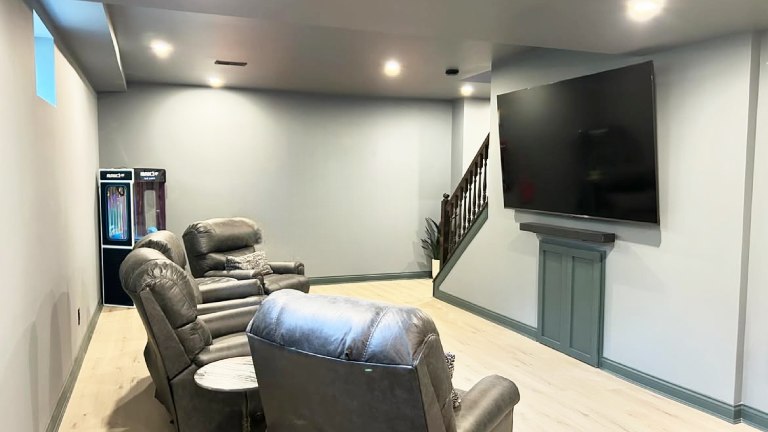
One of my favorite basement projects was for a family in Decatur. They wanted a dedicated place to host football watch parties without taking over their main living room. Their unfinished basement had plenty of space. But low lighting, exposed ductwork, and an awkward layout made it feel more like storage than somewhere to gather.
We turned it into the room everyone naturally gravitated toward by reworking the seating arrangement, adding layered lighting, and building a compact wet bar near existing plumbing,
That project reinforced an important lesson. A successful basement remodel is not defined by expensive finishes. It is built around thoughtful planning and the way people actually use the space.
If you are finishing or remodeling a basement in the Atlanta area, these design strategies consistently deliver the best results.
Why Basement Lounges Make Sense in Atlanta
Atlanta’s long, humid summers make finished basements especially appealing. Because they are below grade, they often stay cooler than the upper floors, making them ideal for movie nights, game days, or family gatherings.
Many homes throughout Sandy Springs, Marietta, and other metro neighborhoods were built with unfinished basements. This creates an opportunity to add valuable living space without expanding the home’s footprint. A well-designed basement can also increase everyday enjoyment while adding resale appeal.
Start With the Layout
Before thinking about furniture or paint colors, evaluate the room itself.
Pay close attention to:
- Existing plumbing
- Ceiling height and ductwork
- Natural light
- Window locations
- Traffic flow between activity zones
Whenever possible, place the primary seating area beneath the highest section of the ceiling and position the wet bar near existing plumbing to reduce construction costs. Leave at least 42 inches of clearance around seating so guests can move comfortably throughout the room.
Instead of filling every corner with furniture, allow each area to serve a clear purpose. A simple layout usually feels larger than one that’s overcrowded.
Lighting Changes Everything
Lighting has a bigger impact than almost any finish in a basement.
Rather than relying on a single ceiling fixture, combine three types of lighting:
- Ambient lighting: Recessed ceiling lights provide even illumination.
- Task lighting: Pendants above game tables and LED cabinet lighting improve functionality.
- Accent lighting: Wall sconces, floating shelf lighting, and toe-kick LEDs create warmth and depth.
One small detail many homeowners overlook is glare. Position recessed lights slightly in front of the main seating area, rather than directly overhead, to reduce reflections on televisions.
Lighting also plays a big role in highlighting decorative features. If you’re creating an accent wall behind the seating area or wet bar, a well-placed mural can add personality without taking up valuable floor space. Pairing it with adjustable sconces or picture lighting helps create a focal point while showcasing the artwork. If you’re looking for inspiration, these creative ways to use wall murals for your home offer ideas for incorporating murals into different rooms and design styles.
Choose Flooring That Can Handle Atlanta’s Humidity
Atlanta’s clay soil holds moisture, so flooring should be selected with durability in mind.
Flooring
Why It Works
- Luxury vinyl plank
- Waterproof, durable, and comfortable underfoot
- Porcelain tile
- Excellent moisture resistance and easy maintenance
- Sealed concrete
- Modern appearance with minimal upkeep
Solid hardwood is rarely a good choice for basements because seasonal moisture changes can cause expansion and warping.
Adding a moisture barrier beneath finished flooring provides another layer of protection, particularly in older homes. Controlling humidity also helps protect appliances installed in basement bars, including beverage refrigerators and wine coolers. When cooling performance starts to decline, it’s often more cost-effective to schedule a Sub-Zero Refrigerator Repair Atlanta before considering a replacement. Appliance EMT has been a dependable resource for many local homeowners dealing with those issues.
Design the Wet Bar as a Functional Workspace
A wet bar often becomes the social hub of the basement, so it deserves the same level of planning as a compact kitchen. A thoughtful design makes it easier to entertain while keeping drinks, snacks, and glassware within easy reach.
Consider including:
- A sink with hot and cold water
- A beverage refrigerator or wine cooler
- Storage for glassware and bottles
- Durable, easy-to-clean countertops
- Dedicated task lighting
If space allows, leave enough countertop area for preparing drinks and serving food without crowding the sink. It’s also worth planning for proper ventilation around built-in appliances. Beverage refrigerators and wine coolers need adequate airflow to maintain consistent temperatures and operate efficiently, so always follow the manufacturer’s recommended clearance requirements during installation.
Plan Entertainment Features Early
Entertainment systems are much easier to install before the walls are finished.
Think ahead about:
- Television or projector placement
- Speaker wiring
- Wi-Fi coverage
- Additional electrical outlets
- Cable management
Planning these details during construction helps create a cleaner finished space while avoiding expensive upgrades later.
Create Separate Activity Zones
The most enjoyable basement lounges accommodate more than one activity.
Instead of building walls, define spaces with furniture placement.
A flexible layout might include:
- A sectional facing the television
- Pub seating near the wet bar
- A card or game table
- Area rugs that visually separate each zone
- Extra seating that can be moved for larger gatherings
The room stays open while allowing different groups to enjoy the space at the same time.
Atlanta-Specific Design Considerations
Local conditions should influence every basement renovation.
Spring and summer humidity often make a dedicated dehumidifier worthwhile, even when central HVAC is already installed. Maintaining indoor humidity between 30% and 50% helps protect flooring, cabinetry, and upholstered furniture.
Many older homes in neighborhoods such as Buckhead and Virginia-Highland also have lower basement ceilings, making lighter paint colors, properly scaled furniture, and layered lighting especially important.
Georgia’s expansive red clay soil can place additional pressure on foundation walls as moisture levels change throughout the year, making waterproofing and drainage essential investments before any cosmetic work begins.
Common Mistakes to Avoid
The biggest mistake I see isn’t choosing the wrong flooring or paint color. It’s designing the room before deciding how it will actually be used.
Other common issues include:
- Skipping moisture testing
- Underestimating storage needs
- Installing too few electrical outlets
- Ignoring appliance ventilation
- Treating lighting as an afterthought
Addressing these details early usually costs less than correcting them after construction.
Frequently Asked Questions
What’s the best flooring for an Atlanta basement?
Luxury vinyl plank, porcelain tile, and sealed concrete perform well because they resist moisture and require little maintenance.
Do I need a permit to finish my basement?
Most projects involving plumbing, electrical work, structural changes, or new egress windows require permits. Always check local building requirements before starting.
Should I install a separate dehumidifier?
In many Atlanta basements, yes. A dedicated dehumidifier helps control humidity more consistently than central HVAC alone.
How much does a basement lounge cost?
Costs vary by size and finishes, but professionally designed basement renovations with custom features like wet bars often range from the mid-five figures to six figures.