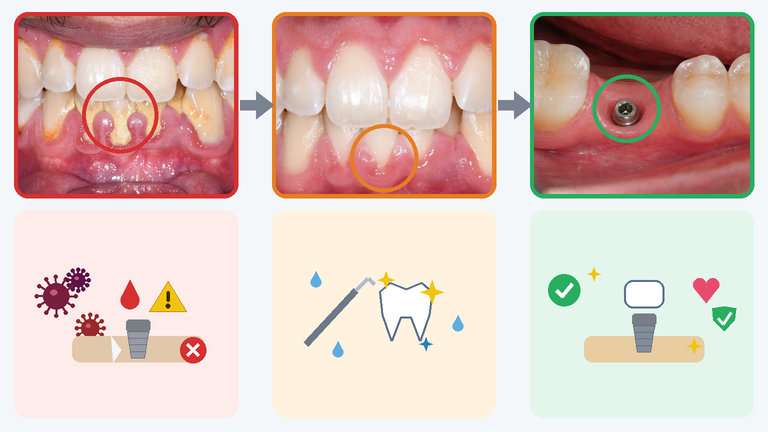
You might feel ready for a dental implant, but your gum condition is not ready for a dental implant. An implant is strong, but it relies on healthy gum tissue and bone to stay put. If you have had gum disease or suspect you have it, periodontal treatment can change how your implant turns out. Here are four reasons it matters and what you can expect along the way.
It Clears Out Harmful Bacteria Before Surgery
Gum disease starts with bacteria living in the pockets around your teeth. Those same bacteria can move to a new implant within weeks. Your mouth does not reset after surgery. If infection is already there, your implant simply becomes a fresh surface for it to settle on.
Scaling and root planing removes plaque and hardened tartar below the gumline. Your dentist smooths the root surfaces so the gum can reattach. Most people need two to four visits. You will usually wait six to eight weeks afterward for a re-check.
Many clinicians want pocket depths under 4 millimeters and little to no bleeding before they place an implant. You can ask for your numbers. They say far more than a casual “your gums look fine.”
It Lowers Your Risk of Peri-Implantitis
Peri-implantitis is gum disease that affects an implant. It causes inflammation, bone loss, and sometimes failure. Research suggests that roughly one in five people with implants develop it at some point. Your risk climbs if you have already had periodontitis.
Here’s the tricky part. A natural tooth has a ligament and a rich blood supply that help it fight infection. An implant has neither. Inflammation spreads faster around it, and bone can vanish quietly. You might not feel pain until the damage is well along.
Treating gum disease first will not erase your risk. It does reduce it, and that’s a trade worth making.
It Protects the Bone Your Implant Needs
Your implant fuses with the jawbone through a process called osseointegration. That process needs enough bone volume and density. Periodontitis eats away at that very bone.
When you control disease early, you may keep more bone and avoid a graft. When you ignore it, your surgeon may need to rebuild the site first. That adds months and cost. A periodontist can also regenerate bone around neighboring teeth, which improves the whole area.
You will often get a 3D scan before surgery. Your dentist can walk you through it. Seeing your own bone levels makes the reason for gum treatment feel real instead of like an extra hurdle.
It Gives You Healthier Gums for Better Healing
Gum tissue forms a seal around your implant. A thick, firm, and pink seal keeps bacteria out. Inflamed gums bleed easily and pull away from the implant, and that opens a path for infection. Healthy tissue also heals faster after surgery, so you will likely feel more comfortable during recovery.
Sometimes you will need a gum graft to add thickness where the tissue is thin. It sounds intense, but it is usually a short procedure with a manageable recovery.
Keep the Results Going After Your Implant
Periodontal care is not a one-time fix. Your hygienist can show you how to clean around the implant with interdental brushes or a water flosser. Maintenance visits every three to four months in the first year let your care team catch bleeding or pocket changes early. You will want to keep those appointments even when everything feels fine. Implants rarely hurt when trouble starts.
What You Can Ask Your Dentist
A few questions can make your first visit more useful:
- What are my pocket depths right now?
- Do I show any bone loss near the implant site?
- How long should I wait after gum treatment before surgery?
- How often will I need maintenance visits?
Common Questions
Can I get an implant if I have gum disease?
Yes, in most cases. You will need to treat and stabilize the disease first. A dentist in West LA will recheck your gums before scheduling surgery.
How long does periodontal treatment take before an implant?
Mild cases may take a couple of months. Advanced cases can take longer, especially if you need grafts or follow-up cleanings. Your timeline depends on how your gums respond.
Can a failing implant be saved?
Sometimes. Early peri-implantitis often responds to deep cleaning and better home care. Advanced bone loss may need surgery or removal of the implant.
Your implant is only as stable as the gums and bone around it. Periodontal treatment gives that foundation a fair chance. You will invest some time and patience upfront. In return, you will protect your smile, your comfort, and the money you have put into your implant.