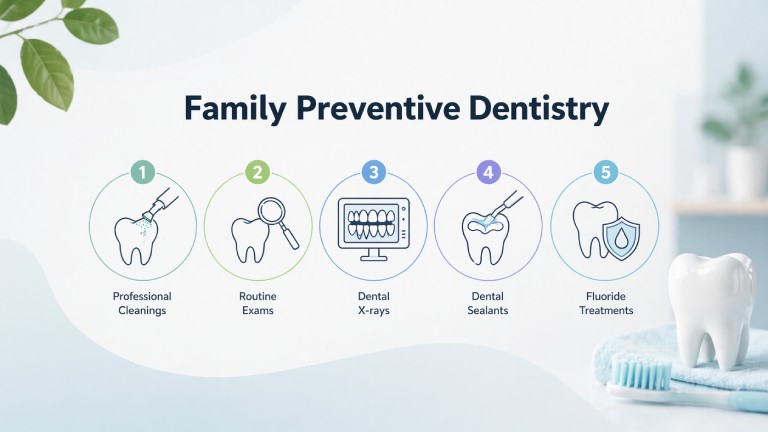
Your family dentist does more than fix problems. The dentist works to stop them before they start. Preventive services protect your teeth, gums, and jaw. They also save you time, pain, and money. This blog explains five common services you can expect at most family practices. You will see how cleanings, exams, X-rays, sealants, and fluoride treatments work together. Each one targets a different risk. Together, they give your mouth strong defense. These services support people of every age. Children, adults, and older adults all benefit. That care often depends on the same basic habits. When you understand these services, you can ask better questions. You can plan visits before small issues grow. You can protect your smile with clear steps that feel possible.
1. Professional cleanings
Home brushing and flossing matter. Still, they do not remove all plaque and tartar. Professional cleanings reach what you miss. They clear tough buildup along the gumline. They also reach tight spaces between teeth.
During a cleaning, the hygienist:
- Scrapes off tartar that hardens on teeth
- Polishes teeth to smooth rough spots, plaque likes
- Shows you simple ways to brush and floss better
Regular cleanings lower your risk of cavities and gum disease. They also help with fresh breath. Most people need a cleaning every six months. Some people with gum disease need them more often.
2. Routine exams
Cleanings and exams work together. During an exam, the dentist looks for early signs of trouble. Early problems often feel silent. You may not feel pain. You may not see a change in the mirror.
In a routine exam, the dentist checks:
- Each tooth for soft spots or cracks
- Your gums for swelling or bleeding
- Your bite to see how your teeth meet
- Your tongue, cheeks, and throat for cancer signs
The dentist may also ask about grinding, clenching, or dry mouth. These habits can wear teeth down. They can also raise your cavity risk. Early care keeps problems small and less costly.
3. Dental X-rays
X-rays show what eyes cannot see. They reveal decay between teeth. They also show infections at the roots and bone loss around teeth. With X-rays, your dentist can spot problems long before they cause pain.
Common types of X-rays include:
- Bitewing X-rays that show decay between back teeth
- Periapical X-rays that show the full tooth and root
- Panoramic X-rays that show all teeth and the jaw
Modern digital X-rays use very low radiation. The amount is often less than what you get from daily life. The dentist chooses the type and timing based on your age, risk, and history.
4. Dental sealants
Back teeth have deep grooves. Food and germs hide in those grooves. A toothbrush tip often cannot reach them. Sealants cover those grooves with a thin shield. This shield blocks germs from getting in.
The sealant process is simple:
- The tooth gets cleaned and dried
- A gentle gel prepares the surface
- The sealant liquid goes on the chewing surface
- A light hardens the sealant
Sealants help children and teens the most. Their new molars are fresh and easier to protect. Adults with deep grooves can benefit as well. Sealants can last for years. The dentist checks them at each visit and repairs them when needed.
5. Fluoride treatments
Fluoride makes tooth enamel stronger. It helps repair early damage from acid and sugar. It also slows the growth of cavity-causing germs. You take in fluoride from toothpaste and often from tap water. In-office fluoride gives extra support.
Fluoride treatments often come as:
- Varnish is brushed on the teeth
- Gel or foam in a tray held on the teeth
- Rinse, swish, and spit out
Children with growing teeth gain strong benefits from fluoride. Adults with dry mouth, gum disease, or many fillings also gain extra protection. The dentist chooses how often you need fluoride based on your risk.
The National Institute of Dental and Craniofacial Research explains how fluoride helps prevent cavities across all ages.
How these services compare
Each service plays a different role. Together they form one strong plan. Use this table to see what each one offers.
|
Service |
Main purpose |
Who needs it most |
Typical timing
|
|
Professional cleanings |
Remove plaque and tartar |
Everyone |
Every 6 to 12 months |
|
Routine exams |
Find early problems |
Everyone |
Every 6 to 12 months |
|
Dental X-rays |
See hidden decay and bone changes |
Children and adults at higher risk |
Every 1 to 3 years or as needed |
|
Dental sealants |
Protect deep grooves from decay |
Children and teens |
When new molars come in |
|
Fluoride treatments |
Strengthen enamel and repair early damage |
Children and high-risk adults |
Every 3, 6, or 12 months |
Putting preventive care into your life
You control many of the forces that shape your mouth. You may also see related care, such as dental implant restoration in Troy, if you live nearby. You can:
- Brush twice a day with fluoride toothpaste
- Floss once a day
- Limit sugary snacks and drinks
- Drink water instead of sweet drinks between meals
- Keep regular visits even when your mouth feels fine
These habits work best when you pair them with the five services above. Together, they cut the chance of sudden pain, lost teeth, and high bills. They also protect your ability to eat, speak, and smile with ease.
Preventive care is not extra. It is basic protection for you and your family. When you stay ahead of problems, you protect more than teeth. You protect comfort, confidence, and daily life.