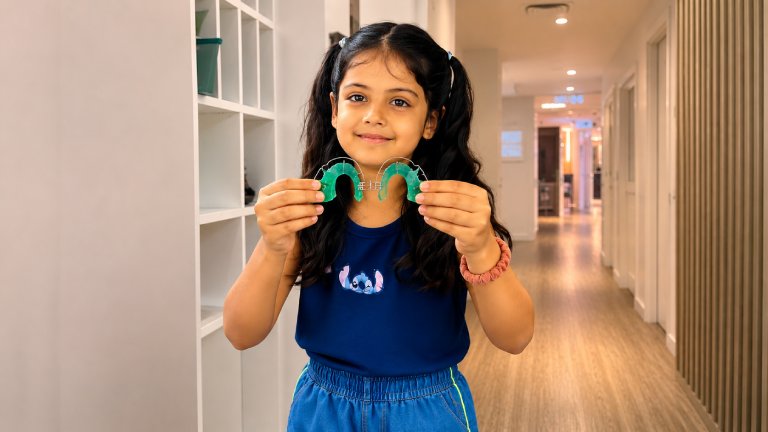
You might be feeling a mix of relief and worry right now. The braces are off, your child’s smile looks amazing, and you are proud of how far they have come. Then the orthodontist brings out a retainer, and suddenly it feels like the finish line moved. Now you are wondering how strict you have to be, what happens if your child “forgets,” and how to keep this tiny, expensive piece of plastic or metal from getting lost or broken.
Many parents are surprised to learn that the retainer phase is just as important as braces. The short version is this. Retainers for kids keep teeth from shifting back; they need to be worn exactly as directed, and a few simple habits can protect your investment and your child’s smile for years.
So where does that leave you today? You want clear answers. You want to know when retainers are really needed, what is normal kid behavior, and how to set your child up to succeed without turning every evening into a battle.
Why do kids need retainers after braces or early treatment?
After braces or other orthodontic treatment, your child’s teeth are straight, but the bone and gums around those teeth are still “soft” and adjusting. Teeth like to drift back toward their old positions. A retainer gently holds everything in place while the jaw and tissues stabilize.
Retainers are not only for kids who had full braces. A pediatric dentist or orthodontist might recommend a retainer if your child:
- Finished braces or clear aligner treatment
- Wore an expander to widen the upper jaw
- Had early treatment to correct a crossbite or severe crowding
- Stopped a thumb-sucking or tongue-thrust habit that changed their bite
Because every child’s mouth is different, the timing and type of retainer can vary. Some kids wear a removable retainer only at night. Others need full-time wear for a few months, then just nighttime. Some need a fixed wire behind the front teeth along with a removable retainer for extra support.
You might wonder if this is really necessary. The honest answer is that skipping retainers or using them “sometimes” is one of the most common reasons teeth shift and treatment has to be repeated later. Retention is not optional. It is the final stage of orthodontic care.
What makes retainers for kids feel so challenging?
On paper, retainers sound simple. Your child just wears the appliance, and everything stays straight. In real life, you are dealing with busy mornings, forgotten backpacks, school lunches, sports, sleepovers, and normal kid resistance.
Here are a few common stress points for parents.
- Responsibility vs reality. Your child is suddenly responsible for a small, easy-to-lose device. It gets wrapped in napkins, left in classrooms, or chewed by the dog.
- Comfort and speech. Some kids feel awkward at first. They may say it is hard to talk clearly or that it feels tight. This can lead to “forgetting” to wear it.
- Cost and time. Replacing lost or broken retainers can be expensive. Extra visits mean more time off work and school.
- Power struggles. You want to protect the smile you paid for and planned for. Your child wants as little disruption as possible. That tension can turn into nightly arguments.
Because of this tension, you might wonder how strict to be. Do you check their mouth every night? Do you punish them if they lose it? Do you replace it right away if it breaks?
Before you decide, it helps to understand what is normal. Mild tightness when a retainer goes in is common, especially if it has not been worn perfectly. A bit of extra saliva or a small lisp in the first days is also common. What is not normal is pain that makes your child cry, sores that do not improve, or a retainer that suddenly does not fit at all. Those are signs you should call the pediatric dentist or orthodontist.
If you want a simple, clinical explanation to share with your child, this guide on wearing a retainer can be helpful. It explains why consistent wear matters in child-friendly language.
Types of kids’ retainers and how they compare
There is no single “best” retainer for every child. The right choice depends on your child’s age, the type of treatment they had, and how responsible they are likely to be.
The table below gives a simple comparison to help you understand the tradeoffs.
|
Retainer Type |
How it Works |
Pros |
Common Challenges |
Best For |
|
Clear removable (plastic tray) |
Snaps over the teeth and holds them in place |
Nearly invisible. Comfortable. Easy to clean. Good for night wear. |
Easy to lose. Can warp if exposed to heat. Needs consistent wear. |
Responsible older kids and teens who care about appearance |
|
Hawley removable (plastic with wire) |
Acrylic plate on the palate or behind lower teeth with a front wire |
Very durable. Adjustable by the orthodontist. Long lasting. |
More noticeable. Can affect speech at first. Also easy to misplace. |
Kids who need a strong, adjustable retainer and can store it safely |
|
Fixed or bonded retainer |
Thin wire glued behind the front teeth |
Cannot be removed or lost. Works 24 hours a day. No compliance issues. |
Harder to clean. Can trap plaque. Needs regular dental checks. |
Children or teens at high risk of relapse or of losing a removable retainer |
A pediatric dentist will often combine a fixed retainer behind the front teeth with a removable nighttime retainer. This gives extra stability while allowing fine control if small shifts occur.
If you would like more detail on what orthodontic retention can look like for children, this teaching sheet on orthodontic retention shows typical wear schedules and care tips that many pediatric practices follow.
How can you keep your child’s retainer safe and their smile stable?
Knowing all of this, you might be asking one big question. What can you actually do at home to make retainer wear routine instead of a daily argument? If you’re searching for guidance or support, pediatric dentistry in Greenwich Village, NYC can help you navigate this next phase with confidence.
Here are three clear steps you can start right away.
1. Create a simple “retainer routine” your child helps design
Kids are more likely to follow a plan they helped create. Together, map out exactly when and where the retainer is worn and stored.
- Pick specific times, such as “in after brushing at night, out after breakfast” or “in after homework, out before breakfast.”
- Choose a permanent “home” for the case at home. For example, the bathroom shelf or a nightstand. The rule is simple. If it is not in your mouth, it is in the case.
- Use reminders that fit your child’s age. This might be a sticky note on the mirror, a phone alarm, or a chart they can check off.
When your child knows the pattern, retainer wear starts to feel like brushing teeth.
2. Protect the retainer from the most common risks
Most lost or broken retainers come from the same few habits. If you can prevent those, you protect your child’s teeth and your budget.
- Never wrap the retainer in a napkin. In school cafeterias and restaurants, wrapped retainers almost always end up in the trash.
- Keep it away from pets. Dogs love to chew on retainers. Store the case high and out of reach.
- Avoid heat. Do not clean a retainer in boiling water or run it through the dishwasher. Use cool or lukewarm water only.
- Clean it daily. A gentle toothbrush and mild soap or recommended cleaner helps keep it clear and fresh. Do not use toothpaste on clear plastic trays. It can scratch them.
If the retainer cracks, warps, or suddenly feels very tight or loose, call your pediatric dentist or orthodontist. Waiting too long can allow teeth to shift, which may mean more treatment later.
3. Keep the focus on your child’s smile, not on blame
Even with a good plan, kids make mistakes. Retainers get left in classrooms or dropped on the floor. When that happens, it is easy to react out of frustration, especially if you are thinking about the cost.
Try to keep the focus on problem-solving instead of blame.
- Ask what happened and what might help next time. For example, “Where were you when you took it out. Where could you put the case so you see it before you leave?”
- Connect it back to their goals. Maybe they like how their teeth look now, or they are excited about yearbook photos. Remind them the kids’ retainer is what keeps that result.
- Work with the dental team. If cost is a concern, ask about payment options or whether a different style of retainer might be more durable for your child.
When your child feels supported instead of scolded, they are more likely to cooperate and tell you early if something is wrong with the retainer.