Buying an air purifier seems easy until you start comparing models. Within minutes, you are drowning in CADR ratings, filter types, noise levels measured in decibels, and coverage areas listed in square feet. Every brand claims to be the best, and the spec sheets start blurring together.
Here’s the thing: most of those numbers don’t tell you what you actually need to know. After spending years studying how people compare products across dozens of consumer categories, I have found that the specs manufacturers highlight are often the least useful ones for making a confident decision.
The Three Specs That Matter Most
1. Coverage Area vs. Room Size
The single most overlooked factor is matching the purifier to your actual room. A unit rated for 200 square feet will cycle air efficiently in a bedroom but struggle in an open-plan living area. Manufacturers sometimes list coverage for a single air change per hour, while health guidelines recommend four to five changes per hour for allergy relief.
Before comparing anything else, measure the room. Then look for a purifier rated for at least 1.5 times that area. This buffer ensures the unit doesn’t have to run at maximum speed constantly, which leads to the next point.
2. Noise at the Speed You Will Actually Use
Every purifier lists a noise level, but most quote the lowest fan speed. The one you will rarely use if you want meaningful filtration. A unit that whispers at 25 decibels on low might hit 55 decibels on high, which is louder than a normal conversation.
Check the noise rating at medium or high speed. If the manufacturer only provides the low-speed number, that’s a red flag. The purifiers worth considering are the ones that stay under 45 decibels at their most commonly used setting.
3. Annual Filter Replacement Cost
The sticker price on an air purifier is only part of the equation. Replacement HEPA filters can cost anywhere from $20 to $80 each, and most need swapping every six to twelve months. Over a three-year span, filter costs can exceed the original price of the unit.
Compare the annual filter cost, not just the upfront price. A $150 purifier with $30 annual filters is cheaper to own than a $100 unit with $70 filters. Yet the cheaper model looks like the better deal on a product listing page.
Why Side-by-Side Comparison Beats Reading Reviews
Product reviews are helpful for understanding a single device, but they fall apart when you are choosing between two or three finalists. Each review uses different testing conditions, different room sizes, and different priorities.
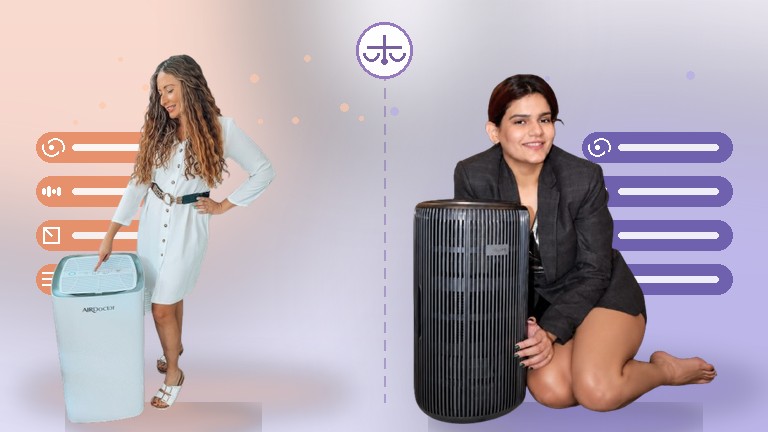
Structured comparison tools solve this by placing products side by side on the same dimensions. You can spot the meaningful differences at a glance. Platforms like VersusFinder apply this approach across thousands of products. It uses consistent scoring metrics that make it straightforward to see how options stack up against each other rather than evaluating them in isolation.
The Bottom Line
Comparing air purifiers doesn’t require an engineering degree. Focus on real-world coverage, noise at usable speeds, and long-term filter costs. Ignore the marketing superlatives and look at the numbers that affect your daily experience. When the specs start to blur, a side-by-side comparison using consistent criteria will get you to a decision faster than reading ten more reviews.