You have heard that mini implants are “cheap knockoffs” of regular implants. They always fail, or that they are only for people who cannot afford “real” treatment. Because of that noise, it is easy to feel frozen and do nothing.
Mini dental implants are smaller implants that can be a smart, stable option for the right person, especially for securing dentures. They are not perfect, and they are not for everyone, but they are not the throwaway option some people claim. The key is understanding the truth behind the most common myths so you can have a clear, honest talk with a denture and implant dentist you trust.
Are mini implants just cheap versions of “real” implants?
One of the most common myths is that mini implants are “fake” implants, almost like a shortcut that will not last. That idea alone can make you feel embarrassed to even ask about them, as if choosing mini implants means you are settling.
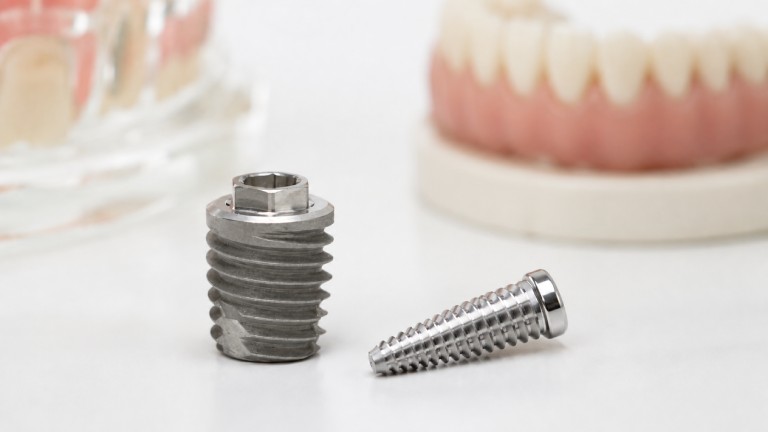
Here is the reality. Both mini implants and standard implants are made from biocompatible materials like titanium. Both are designed to integrate with your Jawbone. The main difference is size. Mini implants are narrower, which allows placement in areas where bone is thinner, often without bone grafting.
Some people also worry that the research is weak. In fact, dental implants as a category are well studied, and there is ongoing research on different designs and sizes. If you want to see more of the scientific background, you can review this clinical overview of dental implants from the National Center for Biotechnology Information.
So where does that leave you? Mini implants are not “fake.” They are a different tool. The question is whether they are right for your jaw, your health, and your goals.
Do mini implants always fail or fall out quickly?
Another story you might have heard is that mini implants are weak and will just fall out after a year or two. If that were true, choosing them would feel like throwing money and hope out the window.
The truth is more nuanced. Like all implants, mini implants can fail if the bone is not healthy enough, if you smoke heavily, if diabetes is not well controlled, or if the bite forces are not managed correctly. Poor planning and rushed work can also increase the risk of problems.
On the other hand, when mini implants are placed in suitable cases and cared for properly, they can last for many years. Many patients use them successfully to stabilize lower dentures, which are often the most difficult dentures to keep in place.
If you imagine two different people, this becomes clearer. One patient has thin jawbone, does not want bone grafting, does not grind their teeth, and mainly wants a secure denture. Mini implants might work very well.
So failure is not “built in” to mini implants. The risk comes from poor case selection and poor follow-up, which is exactly what a careful denture and implant dentist tries to prevent.
Are mini implants only for people who cannot afford better care?
This myth can feel painful. It suggests that if you choose mini implants, you are choosing the “budget” option because you do not deserve or cannot handle something better. That kind of thinking can stir up shame on top of an already stressful dental situation.
Yes, mini implants often cost less up front. The surgery can be simpler. Bone grafting is less likely. Fewer appointments may be needed. That can make them easier to afford, and there is nothing wrong with being practical about cost.
But cost is not the only reason a dentist might recommend them. For people with limited bone, medical issues, or a strong desire to avoid more invasive surgery, mini implants can be a thoughtful choice. The decision is supposed to be based on anatomy, health, expectations, and budget, not just on a price tag.
If anyone makes you feel that choosing mini implants means you are choosing something “less than,” that is not about the treatment. That is about how they are talking to you.
Will mini implants damage my jaw or be unsafe?
You might also worry that because mini implants are smaller, they are somehow unsafe or more likely to cause harm. That fear is understandable. Nobody wants a shortcut in their jawbone.
Dental implants, including smaller designs, are considered medical devices and are overseen by regulatory bodies. The U.S. Food and Drug Administration offers clear guidance about what dental implants are, how they work, and what risks exist. You can read more directly from the FDA on their page on what you should know about dental implants in Scarsdale.
Like any surgery, there are risks. Infection. Nerve irritation. Failure to integrate. These risks are not unique to mini implants. They come with all implant surgery. The safety question is less about the size of the implant and more about planning, technique, and aftercare.
A thoughtful dentist will use imaging, measure your bone, and discuss your medical history before recommending any type of implant. That process, more than the label “mini” or “standard,” is what protects your jaw.
How do mini implants compare to traditional implants and dentures?
When you are already overwhelmed, long lists of pros and cons can blur together. A simple comparison can help you see where mini dental implant myths miss the mark and where they raise fair concerns.
|
Option |
Stability |
Surgery & Healing |
Bone Needs |
Typical Use |
|
Traditional full dentures |
Can move or slip, especially a lower denture |
No surgery. Gums can get sore over time |
No bone support is required, but the bone tends to shrink |
Low-cost, basic tooth replacement |
|
Mini dental implants with an overdenture |
Much more stable than regular dentures |
Often less invasive. Shorter healing in many cases |
Work with thinner bone. Often, no graft is needed |
Securing loose dentures, especially the lower jaw |
|
Standard implants with fixed teeth |
Very stable. Can feel closest to natural teeth |
More involved surgery. Healing can take longer |
Need more bone. Bone grafting may be required |
Full arch fixed bridges or single missing teeth |
So, where does that leave you emotionally and practically? It means you do not have to pick “the best” treatment in an absolute sense. You need the best fit for your body, your budget, and your comfort level, whether that is mini implants, standard implants, or well-made dentures.
3 concrete steps to move from confusion to clarity
1. Write down your real goals, not just “fix my teeth.”
Before you talk to anyone, take a few quiet minutes and write what you truly want. Is it to eat a steak again? To stop using denture adhesive. To smile in photos. To avoid big surgeries. Be honest about your fears, too. Cost, pain, failure, embarrassment. Bringing this list to a consultation helps your dentist match options to what matters most to you.
2. Ask targeted questions in your consultation.
When you meet with a denture and implant dentist, ask specific questions about mini implants. For example. “Am I a good candidate for mini implants and why?” “How much time for placing them?” “What are the alternative options for my situation?” “What are the realistic risks for me based on my health?” Good answers will be clear, not rushed, and will include both benefits and limits.
3. Get a second opinion before deciding.
If you are being pushed into or away from mini implants without a clear explanation, that is a signal to pause. A second opinion is not disloyal. It is smart. Another experienced provider can confirm the plan, suggest adjustments, or offer a different approach. Sometimes just hearing the same message from two independent experts gives you the confidence you need to move forward.